

Google Update
Google disabled the &num=100 URL parameter, changing how SEO and AI tools collect and display data.
&num=100 Parameter
This parameter was used by SEO tools, rank trackers, and AI systems to efficiently scrape data and analyze SERP trends.
Improved Data Integrity
The change aims to make Search Console data more accurate by reflecting genuine user behavior.
New SEO Focus
The update shifts the focus to securing Page 1 rankings, as only the top 10 positions in the search results will guarantee impressions.
Data Control
Google disabled the parameter to reduce strain on its infrastructure, tighten control over its data, and restrict access for competing AI and SEO platforms.
Between September 12-14, 2025, Google secretly rolled out a new update that has affected many SEO dashboards of publishers around the world. Even though it didn’t affect rankings or visibility in search results, it did change how data would be collected and displayed, especially in Google Search Console.
Google has officially disabled the &num=100 parameter, which previously allowed SEO tools and even AI to retrieve up to 100 search results. Publishers are facing a huge downtrend in their impressions and query count. Let’s hear it by the numbers.
According to Search Engine Land
- More than 80% of sites have faced a decline in impressions in Google Search Console
- 77.6% of the sites have lost their unique ranking terms
- Fewer queries are now visible on page 3+, suggesting that rankings will now only reflect actual positions in the SERP.
If your performance report has changed in terms of impressions or unexpected drops in the last few days, this blog is for you. Let’s get started.
What is the &num=100 parameter?
The &num=100 parameter is a type of query string modifier used by Google Search URLs to request 100 results per page instead of the default 10. AI systems used this parameter for search engine scraping, SEO analysis, and data collection.
Here is what an example query would look like with the &num=100 parameter:
https://www.google.com/search?q=example+query&num=100
Now, let’s move to the next question, which is why this parameter was so widely used. There are multiple ways &num=100 helped SERP analysis and AI data workflows, some of them are listed below:
- SEO tools and analysts use it to scrape more results efficiently.
- Rank trackers relied on it to monitor keyword positions beyond the first page.
- Researchers used it to analyze SERP trends without clicking through multiple pages.
Why Google Did This?
While the disabling of &num=100 may seem technical on the surface, it reflects a deeper strategy that touches infrastructure, competition, and data integrity. Here’s a breakdown of what happened behind the scenes.
Safeguarding Infrastructure
Data scraping, especially from SEO tools and AI systems, puts excessive strain on Google’s infrastructure. The &num=100 parameter enabled SEO and AI platforms to extract data with minimal effort; removing it will enforce more granular but less efficient scraping. This move will help Google preserve system stability and performance under increasing automated traffic.
Strategic Data Exposure
SEO platforms and AI companies use Google’s SERP data for their own insights and models. With rising competition between AI-driven search alternatives (e.g., OpenAI, Anthropic, Perplexity), Google has strong incentives to restrict access to its search ecosystem. By disabling bulk access, Google has tightened its control over how search data is harvested and reused externally.
Commercial Implication
Limiting results to 10 per page means users and bots must load more Google Search Results Pages, each of which may contain ads. This potentially boosts ad visibility and revenue for Google.
Preserving Search Integrity
To maintain the quality and reliability of the Google search experience, the main aim behind disabling this parameter is to reduce artificial traffic. With fewer bot-driven impressions after the update, platforms like Search Console will reflect genuine user behaviour on the publisher’s platforms.
&num=100 Impact on SERPs
For a long time, SEO platforms have leaned on automated SERP APIs to extract search rankings in bulk. These systems would routinely request 100 results per query, capturing even the lowest-ranking pages. This created a misleading picture of visibility, inflating metrics that didn’t reflect actual user engagement.
SERPs with &num=100 Enabled
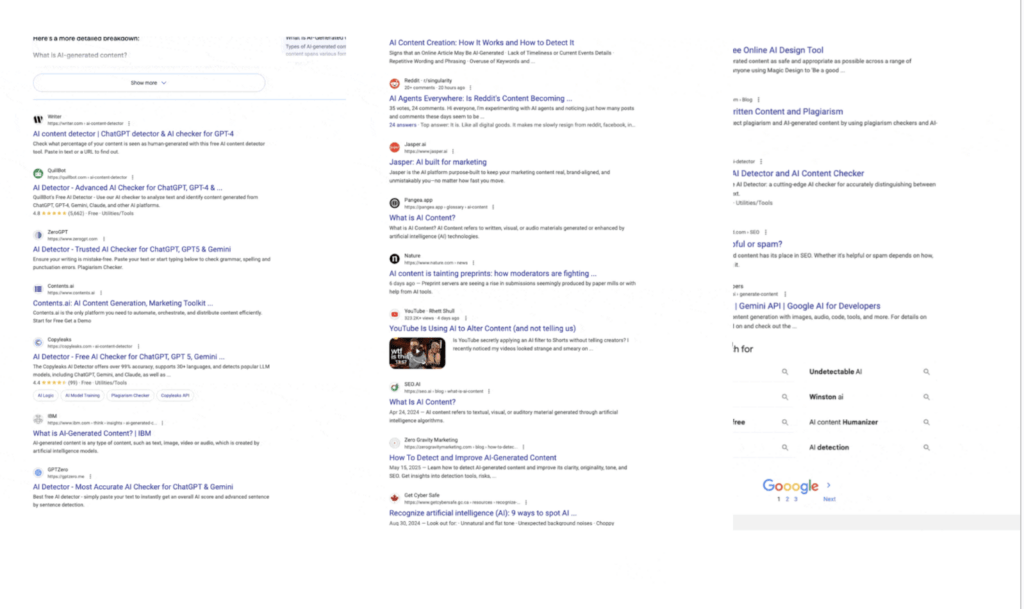
Until recently, search engines showed more than 10 results on one page. That meant all the results seen by users got counted for their position in the rankings.
Google also used to allow SEO and AI tools to view up to 100 search results using the &num=100 parameter. This meant that every listed search engine result would automatically receive an impression and a recorded position in Google Search Console, regardless of whether a real user actually saw it.
This type of visibility is precisely why most rank tracking platforms report keyword positions all the way from 1 to 100. This small change significantly alters how Google Search Console calculates key performance metrics like impressions and average position.
SERPs with &num=100 Disabled
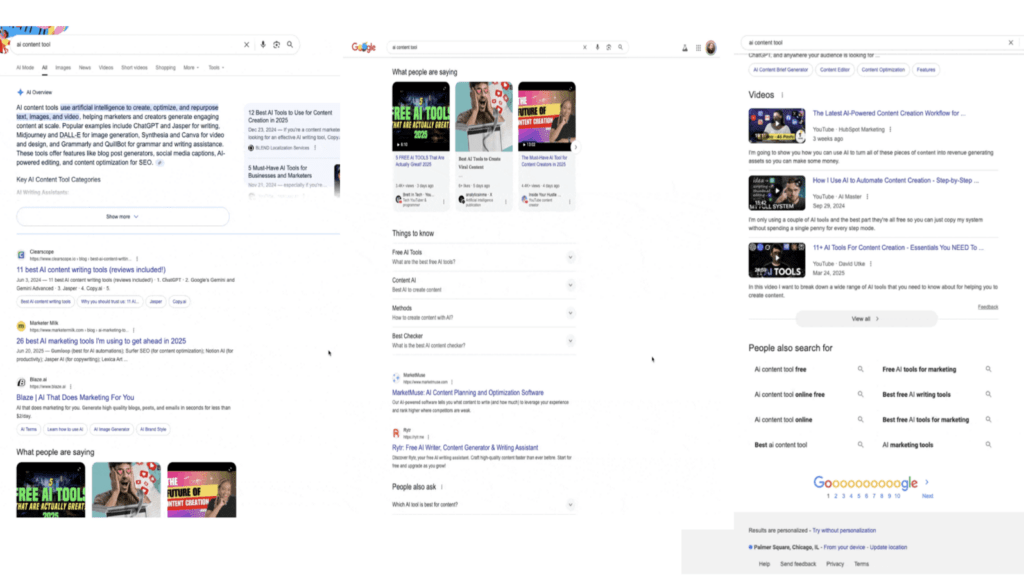
With the removal of the &num=100 parameter, Google has limited the search results to just 10 per page.
This small change significantly alters how Google Search Console calculates key performance metrics, such as impressions and average position.
But what does it mean? According to Google, now an impression is only recorded when a link to your site actually appears on the page the user views. If your page ranks on page 3, but the user only browses page 1, your link receives no impression for that query.
Let’s Step Into an Example
Let’s say you published a high-quality blog that was ranking at #9 for a ranking keyword and #70 for a less competitive keyword.
Before &num=100 got disabled:
SEO tools use &num=100 to scrape all 100 results at once. If your blog was at #72, it still used to get an impression, even though no real user saw it.
Then the Google Console Records used to count these impressions as your average position, which was not accurate at all.
After &num=100 got disabled:
Google now displays only the top 10 results per page. Users must view a page for it to count as an impression, but most never make it to page 8, where position #72 appears, so they don’t generate any impressions for it.
This resulted in an average position improvement of 9th position, accurately reflecting where real users encounter your content.
Now, since we have discussed the implications of Google disabling the &num=100 parameter from impression tracking to changes in average position, it’s time to pivot toward solutions and learn how to turn this challenge into an opportunity.
What You Should Do?
With the &num=100 parameter disabled, SEO data is now more aligned with actual user behavior. Here’s how to adapt:
- Rethink Your Benchmarks: Reset your performance baselines, expect fewer impressions but better average positions.
- Focus on Page 1 Rankings: Since impressions only count when users view the page, prioritize content that ranks in the top 10.
- Audit Your SEO Tools: Ensure your rank trackers and dashboards are updated to reflect the new page limits.
Will Traditional SEO Matter?
Without any doubt, a good SEO strategy is required now more than ever. Here are the top 3 SEO metrics you need to optimize after &num=100 got disabled.
- With metrics now reflecting real user views, optimizing for actual engagement (click-through rate, relevance, UX) has become more critical.
- Ranking deep in the SERPs is no longer a metric for visibility. To gain attention, you need to create high-quality content that speaks directly to your audience’s needs and intent.
- Faster load times, mobile optimization, and structured data will also help you secure top 10 positions.
After Math: Ahrefs vs Semrush vs Google Analytics vs Google Search Console
Google Analytics and Search Console will now offer cleaner, more user-driven data. SEO tools like Ahrefs and Semrush will need to adjust their scraping logic and may report fewer impressions for lower-ranking keywords. Here is a detailed table explaining how these tools got affected after &num=100 parameter removal.
| Tool | Before &num=100 Removal | After &num=100 Removal |
| Ahrefs Semrush | Scraped up to 100 results per query. | Rely on SERPs, reducing deep-rank data and bot-driven impressions. |
| Google Search Console | Mixed real and bot impressions, tempering the average position | Now Search Console will reflect true visibility, making it more reliable for performance tracking |
Frequently Asked Questions
When you search for anything on Google, the results page usually shows 10 results at a time. The num=100 parameter in the URL tells Google to show 100 results on one page instead of just 10. This is especially useful for:
Publishers who want to see how deep their content ranks
SEO platforms that scan bulk search results for analysis
AI tools that crawl and learn from large sets of search data
Here’s how the removal of the &num=100 parameter could affect the following:
Publishers might face reduced visibility for articles that rank beyond page 1, harder to track long-tail keyword performance and a lower chance of being discovered by researchers or AI tools scanning deeper results.
SEO Platforms that rely on bulk scraping may need to rebuild workflows, data collection becomes slower and more fragmented, and competitive analysis and backlink audits may require more API calls or manual effort.
AI models trained on search data may get less diverse input, content recommendation engines could become less accurate, and automated research agents may struggle to access full result for the query.
Earlier, if you wanted Google to show 100 results on one page, you could simply add &num=100 to the end of your search URL. Since the removal of this parameter, you can follow the following steps to see 100 results on one Google search page:
– Go to Google.com
– Click “Settings” at the bottom right, then choose “Search settings”
– Find the section called “Results per page”
– Move the slider to 100
– Scroll down and click “Save”