The AdTech industry is turning its attention toward a concept that puts publishers back in control – Demand Path Optimization (DPO). DPO is the process where publishers analyze and streamline how advertisers and agencies purchase their inventory.
This move mirrors what advertisers have long been doing through Supply Path Optimization (SPO). It is a process where the buyer side optimizes the supply to get access to top-performing inventories at the best possible price.
DPO basically mirrors SPO. They are two sides of the same coin. When implemented together, it allows publishers and advertisers/agencies to meet in the middle, where it benefits both parties.
Our blog will explore what is Demand Path Optimization, why should publishers already start implementing it, and how publishers can make DPO a part of their monetization strategy.
Key Takeaways on Demand Path Optimization:
- Demand Path Optimization (DPO) is a strategy utilized by publishers to study the path taken by advertisers to reach their inventory, and optimize it to increase transparency and revenue.
- By mapping and analyzing demand routes, publishers can uncover hidden fees, inefficiencies, and redundant intermediaries that quietly drain revenue.
- However, DPO can be a jarring process for some publishers due to its data-intensive nature.
- AdPushup plays an essential role in DPO via bidder stack optimization, revenue transparency, and consolidated reporting.
What is Demand Path Optimization?
Demand Path Optimization is a process wherein the publisher optimizes the demand path across the Digital Lumascape to reach the top-performing buyers for their inventory.
The strategy works by identifying and analyzing the path the buy-side (Advertisers, agencies, etc.) takes to reach a publisher’s inventory. This knowledge helps them optimize various aspects of the demand path, like AdTech fee and ad yield.
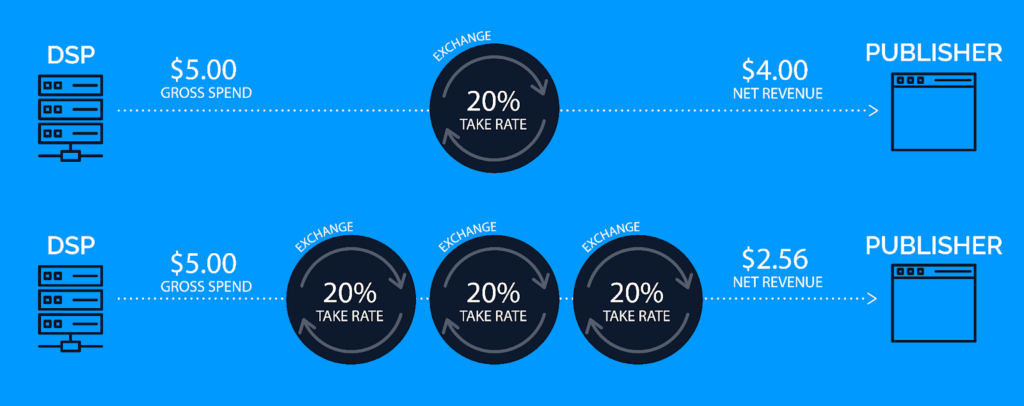
Publishers have traditionally applied a ‘plug and play’ approach to AdTech, trusting that more partners equal more revenue. However, this has led to complexity and loss of control.
The rapid growth in AdTech and header bidding increased supply routes, which reduced transparency; hence, requiring a strategic, quality-focused partner selection for DPO implementation.
Quick Recap:
DPO is the process where publishers analyze and streamline how advertisers and agencies purchase their inventory. The goal is to identify the most efficient and transparent demand paths, reduce unnecessary intermediaries, and ensure that every buyer in the chain adds genuine value.
When Should a Publisher Implement Demand Path Optimization?
Many publishers still follow the “more partners = more revenue” mantra. However, as time goes by, the system that’s meant to be a chain becomes a complicated web, creating more complexity than value. Over time, layering new partners, technologies, and demand sources often clutters the supply chain, making operations less efficient, and the user experience more fragile.
DPO allows publishers to step back, organize their data, and identify which choices are no longer serving their goals. By stripping away unnecessary pathways and focusing on specific KPIs, publishers can not only streamline operations but also improve site performance.
This simplification reduces page load issues tied to programmatic inventory bloat, enhances user experience, and translates into stronger ad performance and yield. In short, DPO should be implemented when complexity outweighs clarity and optimization becomes the path to sustainable growth.
Quick Recap:
When a publisher’s setup grows overly complex with too many partners, the ad supply chain often becomes inefficient, leading to stagnant revenue. That’s the ideal time to pursue demand path optimization. Reassess your demand, identify ad stack inefficiencies, and close existing gaps to maximize performance.
How Does Demand Path Optimization Work?
Here’s how DPO works step-by-step:
1. AdStack Analysis: The publisher starts by examining their current Ad Stack. This includes SSPs, ad exchanges and networks, ad servers, DSPs, and the buy-side routes. They review detailed metrics like win rates, clearing prices, ad quality, payment reliability, bid response times, and buyer relevance to their niche.
2. Buyer and Partner Evaluation: Using a defined set of criteria (best-performing buyers, payment history, relevance, ad quality, and SSP transparency/fees), publishers score each partner.
3. Direct Engagement: Publishers meet or communicate directly with demand partners (buyers, agencies, SSPs) to discuss key topics. This can include preferred prices, inventory volume, ad formats, KPIs, budget, and campaign objectives. This personal touch will strengthen the seller-buyer relationship, which will pay off in the form of more demand and yield.
4. Path Simplification: With the collected insights, publishers identify and remove inefficient, costly, or low-value intermediaries in the chain. The goal is to build direct and transparent demand connections that maximize both revenue and user experience.
5. Unified Reporting: Aggregating performance data from different partners into a unified dashboard helps publishers monitor demand path efficiency and make informed decisions.
6. Ongoing Optimization: Publishers refine their demand path over time, focusing on key metrics, partner transparency, and matching buyer needs to audience profiles. This means continually reassessing the demand path to ensure optimal monetization and minimal latency or bloat.
Quick Recap:
DPO implementation starts with publisher’s AdStack analysis and evaluation using metrics like win rates, payment reliability, and buyer relevance. Then, direct engagement between the publishers and the buyers takes place to understand their pain points, followed by path simplification (removing non-incremental intermediaries). It ends with unifying the performance data of various demand partners for efficient optimizations.
How Does DPO Benefit Publishers?
- Control and Transparency: DPO provides granular control to publishers by identifying which demand partners have access to their inventory. Accordingly, the under-performing & suspicious ad suppliers are removed from the equation, increasing transparency and reducing fraud.
- Revenue Optimization: It helps publishers increase their ad revenue by making their inventory more viable to advertisers. The logic is simple: the cleaner the path is towards the inventory, the more eagerly the advertiser will pay for it.
- Buyer Relations: Constant to-and-fro with advertisers to understand their needs makes the bond stronger, which later translates to more revenue.
What are the Challenges of Demand Path Optimization?
- Data Complexity: DPO can be a tiring process as it requires continuous back-and-forth with a list of chosen buyers & SSPs to retrieve information. Plus, not all data will be relevant to your process, so sifting through the data bulk to get the relevant information can be time-consuming as well.
- Data Organization: The data that you will get from SSPs and the buyers will be in different formats. Organizing them or converting them into a single format for ease can become a challenge as well.
- Time-consuming Process: DPO is indeed a time-consuming process as it requires constant meetings with buyers & SSPs, data organization and processing, on-ground implementation, etc.
Supply Path Optimization vs Demand Path Optimization
Here’s the summarized difference between SPO and DPO.
| Feature | Supply Path Optimization (SPO) | Demand Path Optimization (DPO) |
| Main Focus | Helps advertisers and DSPs streamline and select the most efficient & direct supply routes to ad inventory from publishers. | Helps publishers to identify, prioritize, and guide buyers through the most valuable and efficient demand paths. |
| Initiators | Advertisers, agencies, and DSPs | Publishers, SSPs, and media owners |
| Core Objective | Minimize costs, reduce ad tech fees, avoid redundant intermediaries, raise transparency, improve ROI on ad spend. | Maximize revenue, enhance buyer quality, reduce transaction costs, protect rates, and maintain control over inventory sale channels. |
| Process | Buyers assess SSPs, exchanges, and other intermediaries to filter out non-value partners, consolidate paths, and prune “long-tail” SSPs. | Sellers analyze demand sources, buyer value, payment terms, bid quality, and negotiate or remove less profitable/insecure routes. |
| Benefits | – Less duplicate bidding– Better campaign results- Increased buying power with trusted paths- Faster, cheaper, and more reliable ad delivery | – Greater revenue- Improved business terms- Fewer unpaid or fraudulent buyers- Stronger relationship with quality advertisers |
Quick Recap:
Supply Path Optimization (SPO) reduces costs and intermediaries for advertisers, enhancing campaign efficiency and transparency. On the other hand, Demand Path Optimization (DPO) helps publishers prioritize high-value buyers, maximize revenue, and improve user experience by streamlining demand paths.
Publishers’ To-do List for Demand Path Optimization
1. Transparent Supply Path
Buyers prefer streamlined supply paths, making efficient demand partnerships essential for maximizing inventory value and advertiser trust. A demand path audit helps uncover hidden fees and assess which partners genuinely add value versus unnecessary costs. While not a complete fix, it provides critical transparency to strengthen deals and boost ad revenue.
2. Reduce AdStack Complexity
Publishers can reduce AdStack complexity by collaborating with select demand partners offering transparent and efficient supply paths. Evaluating partners based on bid rates, fill rates, and transparency improves monetization effectiveness. A traffic-shaping solution can further simplify supply chains by consolidating channels and ensuring buyer-ready inventory requests.
3. Eliminate Inefficient Paths
Advertisers, agencies, and DSPs focused on SPO prefer partners that simplify premium inventory purchases while maximizing ROAS.
Since publishers often work with multiple SSPs plus resellers, inefficiencies can emerge in the supply chain. By adopting DPO, publishers and partners create trusted, streamlined premium media paths that encourage repeat buying.
4. A/B Test the DPO Strategies
Publishers implement A/B testing for DPO by tracking revenue fluctuations from different demand path changes using ad performance and engagement data. Controlled experiments compare demand path configurations simultaneously, isolating the effects of optimization strategies on revenue.
This method allows iterative refinement of DPO strategies by distinguishing revenue impacts from market changes in real time.
Quick Recap:
Here’s a to-do list for publishers to implement demand path optimization: focus on creating a transparent supply path for advertisers, only partner with quality partners to remove adstack complexity, and constantly A/B test your DPO strategies.
How Does AdPushup Fit in Demand Path Optimization (DPO)?
AdPushup (now Geniee India), a reliable Google-certified Publishing Partner, plays a key role in DPO for publishers. It utilizes its technology and partnerships to help analyze and strategically route demand for optimal revenue and transparency.
Moreover, AdPushup’s approach aligns closely with the strategies and recommendations for implementing DPO:
- Data-driven decision-making
- Optimizing the bidder stack to have only the relevant demand partners
- Partnering only with quality demand sources
- Single dashboard for consolidated reporting
Our platform uses an AI-powered optimization engine to optimize pathways between supply and demand, which is a foundational element of DPO.
Most importantly, AdPushup’s dedicated account management, A/B testing tools, and partnerships brings highest-yielding demand to publishers. This helps publishers trim out underperforming or redundant partners and reduce fee leakage or low-quality ad sources.
FAQs on Demand Path Optimization (DPO)
DPO in advertising is a publisher-centric strategy where the publisher analyzes the routes/paths taken by the demand partners to reach their inventory. They study the paths and use that knowledge to optimize them further so that buyers can find their ad space more efficiently, all while increasing their ad yield.