Native advertising works best when it disappears into the experience, yet still delivers a clear commercial outcome. But not all native formats achieve that balance.
Some feel intrusive. Some look like display ads in disguise. And a few are so well executed that readers engage with them as naturally as they do with editorial content.
This blog breaks down native advertising examples that actually work across publishers, formats, and contexts.
Let’s first understand what exactly native advertising is.
Key Takeaways
- Native advertising works when the ad matches the platform’s style and flow, becoming part of the user experience.
- Our blog highlights 10 real native ad examples, including in-feed social ads, sponsored listings, in-game placements, and Snapchat filters.
- When native ads match user context, they feel relevant and useful instead of disruptive.
- Top-performing native campaigns provide value, storytelling, utility, or immersive experiences, not just sales pitches.
- Publishers can use these examples as benchmarks to design native ad units that blend seamlessly with content and increase engagement.
What is Native Advertising?
Native advertising : What is it?
Native advertising is a non-disruptive way of advertising that matches the style and format of the content on the platform.
In fact, native advertising examples can be differentiated in types, such as sponsored content, social media, in-feed ads, etc.
The defining characteristic is seamless integration.
- A native ad on social media looks like an organic post.
- A sponsored article on a news site reads in the same editorial voice as surrounding coverage.
- A product recommendation feels like an authentic suggestion, not a sales pitch.
However, this doesn’t mean deceiving audiences. Every native ad should include a clear disclosure label “Sponsored,” “Paid Content,” or “Promoted.”
The only thing that differentiates native ads from other ad types is that it can align with the established editorial tonality and style of the website/app.
5 Most Common Types of Native Ads
The term “native ad” refers to a large and ever-expanding list of advertisement formats and delivery methods.
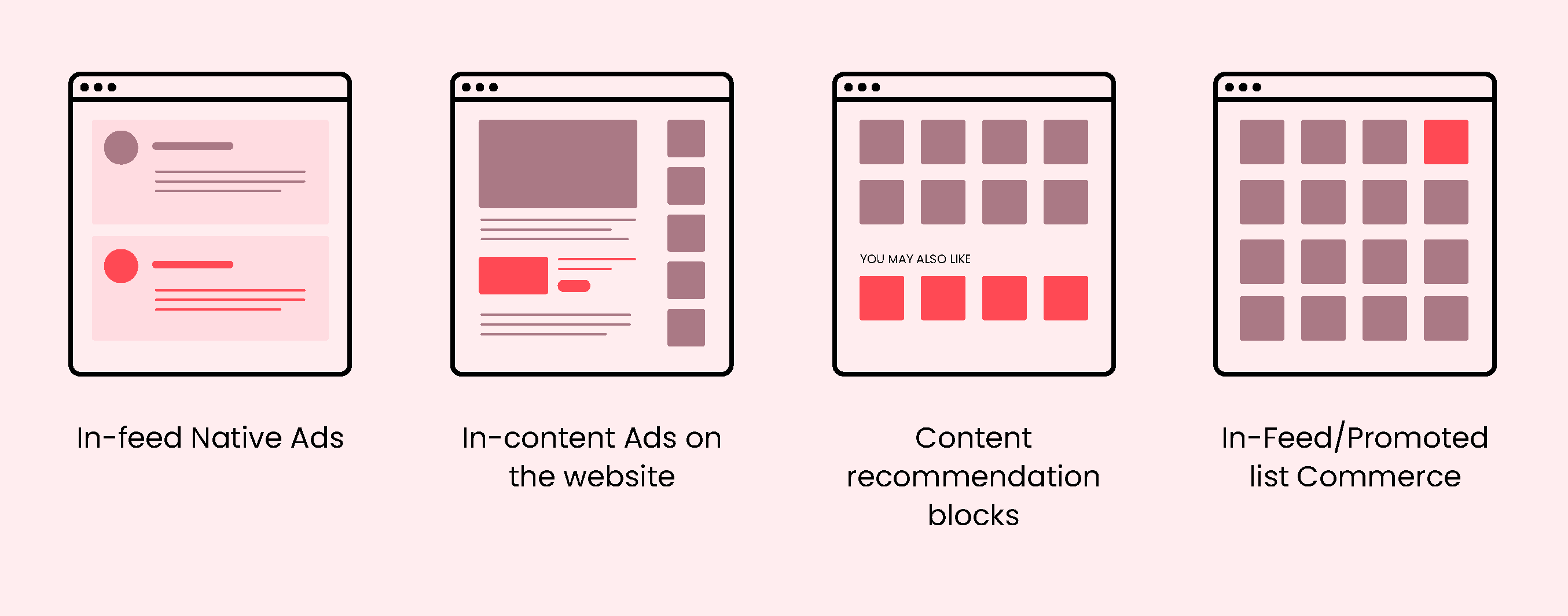
In-Feed Ad Units
In feed ad come integrated into the content, social platform or feeds. They are custom-made to blend really well with the content of the publisher and minimize disruption and obtrusion for the audience. They can be sponsored articles as well as ads designed to appear to be articles and match the content surrounding them.
Search Ads
These are ads that appear at the top of search engine results that appear similar to other results being displayed. The most popular search ads are Google AdWords and Bing Ads.
Recommendation Widgets
When reading an article or viewing other content, you will sometimes see near the content a section with links to related content and pages. These are usually paid advertising spots that guide the visitor to other sites and advertising.
Promoted Listings
These types of ads usually appear on e-commerce sites like Amazon and eBay. They have sponsored product listings that have been paid for by the seller or manufacturer. They appear just like other product listings, but they appear at the top of listings, recommended product listings and other preferred positions.
Contextual Text Ads
Contextual text ads like Google AdSense fall in this category of native ads. They are ads that contain advertising related to the content on the page it appears or is related in some way.
There are, of course, many more forms of native ad formats, but the ones discussed above are the most popular types.
10 Examples of Native Advertising
1. In Feed Social Media Ads
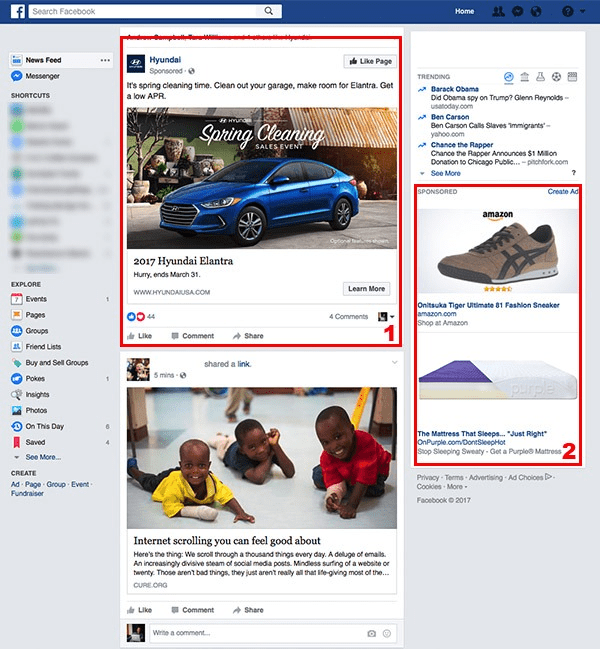
Coming across an ad that invades your feed is no fun at all; in-feed ads, on the contrary, appear while scrolling through your feed amongst the posts of your interest, and you might find a sponsored post promoting a product or service they are offering.
Why they work: Social media ads match the look and feel of the feed. They aim to capture attention using the platform’s visual patterns, leading to better engagement and high ROI.
2. Sponsored Product Listings
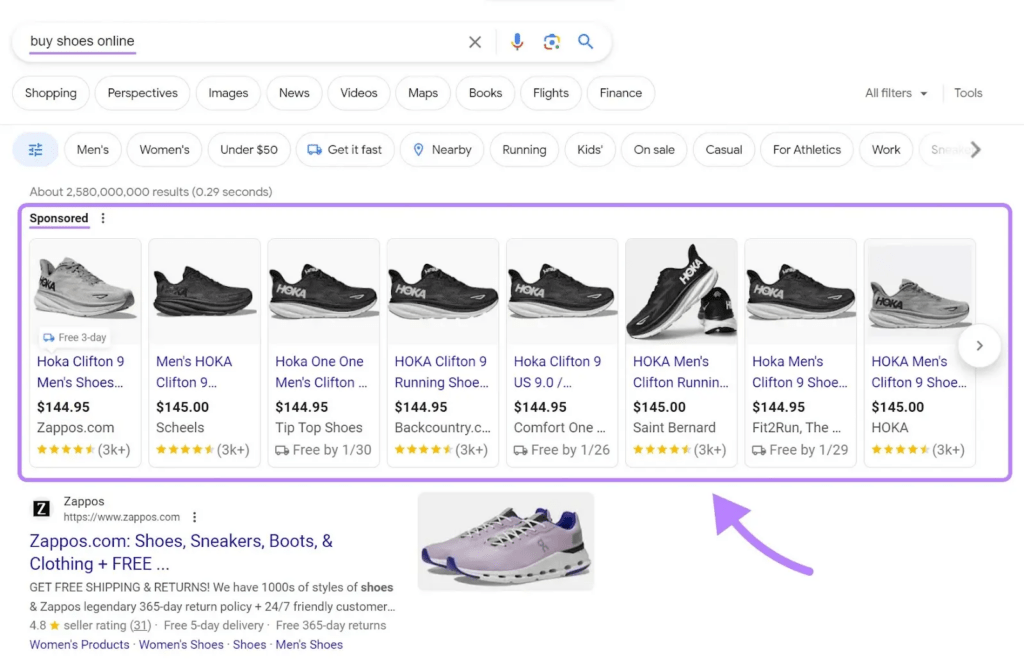
Commonly visible in the shopping tab, these types of native ads appear while searching for a product on an online platform. Some of these ads have a Sponsored tag at the top that highlights the recommendations based on the user’s search.
Why they work: By appearing at the top of the search results, product listings are quick to catch the audience’s attention. Plus, these ads are super relevant as per user’s search intent; therefore, they help in increasing the scope of impressions on the ads.
3. In-Game Advertising
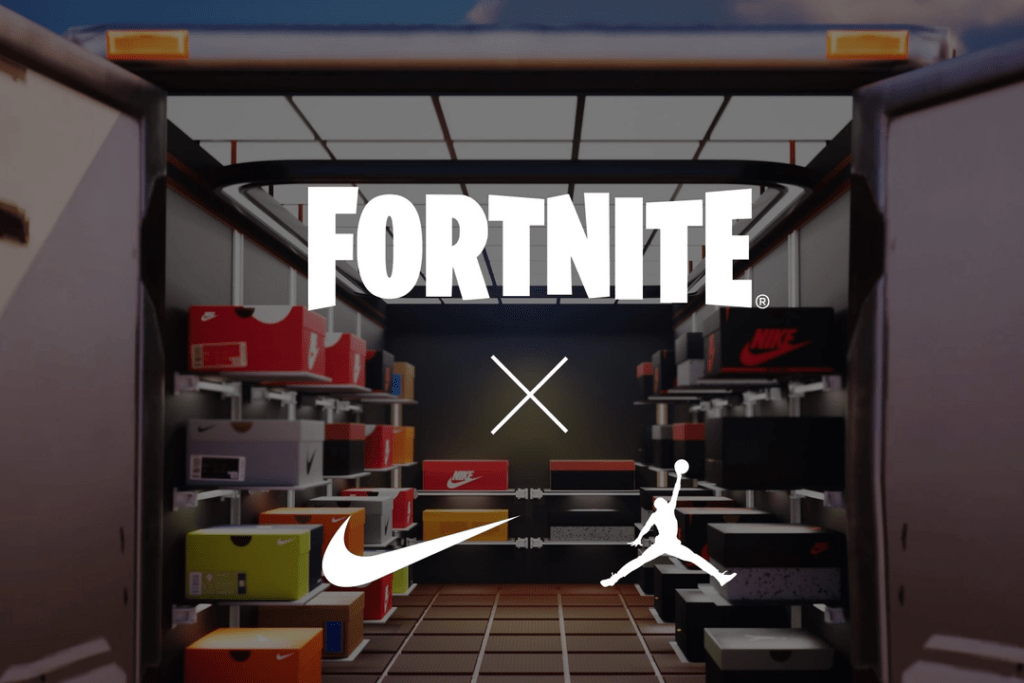
Fortnite x Nike is the perfect example of native advertising. Nike launched Kicks in Fortnite as a cosmetic footwear feature in November 2024 to interact with a new generation of fans where they actually are. By using in-game advertising as a strategy, advertisers can match the context and target a niche-specific audience with ease.
Why they work: These ads help in engaging the user by adding a touch of reality in the virtual world. Their non-disruptive and contextual nature brings out points of interest in the audience, increasing engagement and brand awareness.
4. Sponsored Snapchat Filters

Another one of the best native advertising examples is from Snapchat, which is pretty popular among a a broad social media user base. Therefore, companies capable of paying a hefty amount for promotions leverage SC’s (Snapchat) huge user base. Many events, like the Super Bowl, NFL, NHL, NBA, etc., launch their own special filters to spread awareness of their upcoming events.
Why they work: It’s all about enhancing user experience by providing a fun, shareable and non-disruptive form of promotion through filters. The users voluntarily promote the brand, creating organic visibility and authentic engagement.
5. Content Recommendations
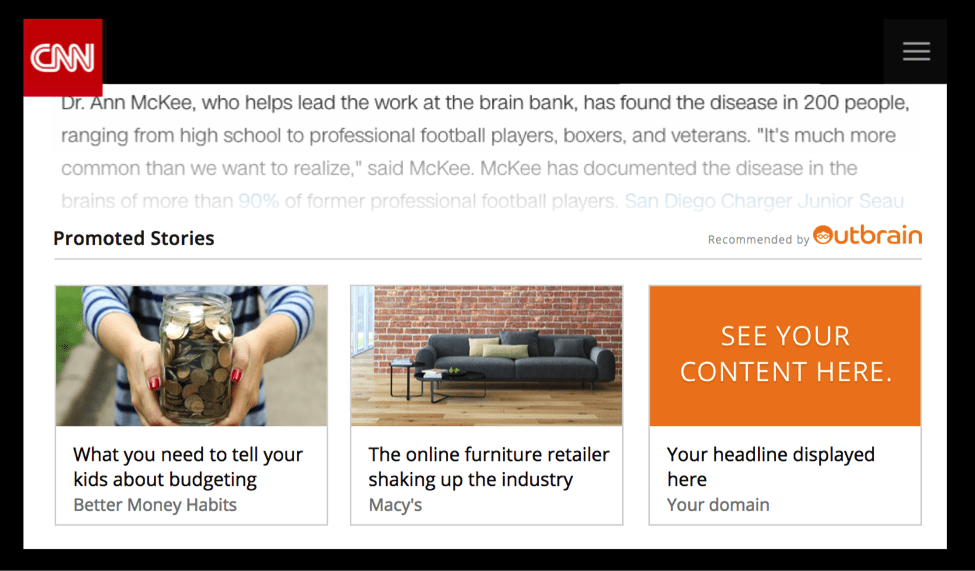
Content Recommendations is a form of native advertising where users can find featured articles from different sources under the heading “Recommended for you”. These forms of recommendations often appear at the bottom of the articles on a content-based website.
Why they work: Keeping up with user’s search context and preferences, these ads are organic and non-intrusive in nature; they subtly nudge the user to other relevant content in the form of suggestions.
6. Sponsored Content

Sponsored Content, like ebooks, white papers, and industry reports, is an effective way of native advertising. Companies with big names usually collaborate with relevant information sources on the basis of context and relevance to issue an expert review on the subject. Deloitte sponsored a white paper “Emerging Market Trends in the Post-Pandemic Era” to offer their expert insights and promote company’s services.
Why it works: Authority attracts an audience that is looking for in-depth knowledge. By sponsoring native content that is relevant to the industry, niche brands can reach the targeted audience easily.
*Since we have covered examples of types of native advertisements. Now, let’s explore some examples of famous brands that specifically used native advertising:*
7. Forbes – Informational Type of Native Ad

Forbes has also resorted to a contributor-led model and has started to publish native advertising. This may be considered one of the best native advertising examples, as although it has a clearly advertisement-based angle, it also has actual informational content.
Why it works: Aligning the sponsored message with user’s search intent feels like an extension of the dedicated content. Relevance, credibility, and attention-worthiness of ads make this type of advertising effective and less intrusive.
8. BuzzFeed – Paid Native Ad Listings
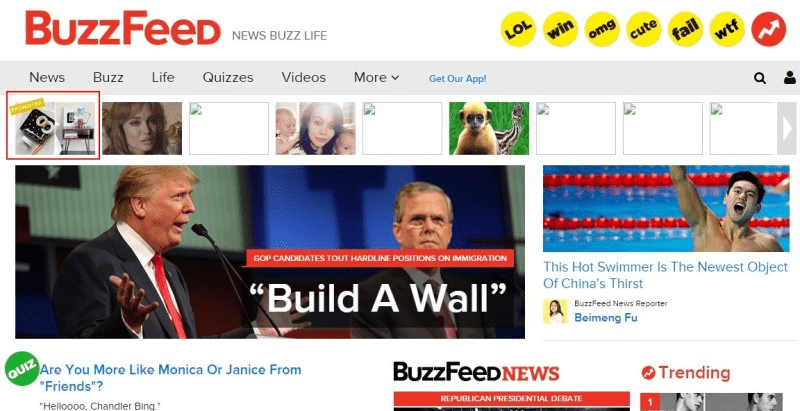
By blending advertisement with entertainment, users feel more interested in the shown ads. Often titled “Promoted By”, paid native ad listings can easily be spotted in yellow boxes. Buzzfeed listicles make ads just another fun-to-read content for the user
Why it works: Buzzfeed’s target audience looks for light and engaging content, and native ads mimic the tone using humour, relatability, or trending topics to hook them.
9. New York Times – Native Ad for Brand Recognition
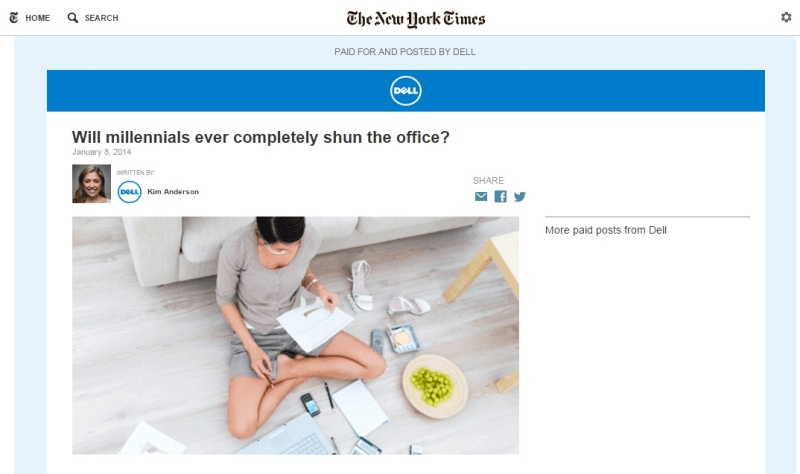
A paid sponsored post by Dell, published by The New York Times, is designed to boost brand recognition. Through this native ad, Dell wants to share their insights with the audience of The New York Times on evolving work habits and remote trends as a key enabler of tech-driven work environments.
Why it works: Relevance plays a very crucial part here. Through this native ad, Dell wants to tap into a timely cultural conversation to showcase their relevance in remote work solutions.
10. Volkswagen For Adventure

This native ad features a road trip and travel guide on a lifestyle website, showcasing scenic routes and hidden gems. These types of native ads are visually rich and align perfectly with brand’s identity as a travel companion.
Why it works: Perfect blend with travel content, these native ads complement the existing travel content and inspire the audience to explore Volkswagen reliability with a spirit of adventure.
Native Advertising vs Traditional Advertising
Advertising comes in many forms; each has its own strengths and uses. Today, we’ll compare native ads with the most commonly used approach, i.e. traditional advertising. On one hand, native ads are designed to blend with the look and feel of the platform to be less intrusive, while traditional ads stand out with more direct messaging. Here’s a side-by-side, detailed comparison of native ads vs traditional ads
| Feature | Native Advertising | Traditional Advertising |
| Integration | Embedded within content and matches platform aesthetics | Clearly separate from content; often stands out |
| User Experience | Designed to align with user experience | May interrupt or contrast with the user experience |
| Engagement | Often encourages interaction through contextual relevance | Relies on visibility and repetition to gain attention |
| Trust & Credibility | May be perceived as more trustworthy due to subtlety | May be viewed as a promotional or biased form of advertising |
| Targeting & Relevance | Tailored for specific audiences and platforms | Uses broader targeting across multiple channels |
5 Best Practices for Native Ads
As native ads continue to grow as part of the advertising industry, mastering them is a need of the hour. The goal behind native ads is not to create a camouflage promotional content but an engaging, meaningful experience that feels relevant and natural to the user.
Here are some smart, user-focused best practices that can be followed to help brands connect with audiences and earn more ad revenue for publishers.
1. Be Upfront about Sponsorships
The ad should use the same fonts, colors, layout, and editorial tone as surrounding content. If readers have to pause to determine whether something is an ad before seeing the disclosure label, the design is working.
Effective native ads don’t jar the user out of their reading experience. They feel like a natural part of the content journey.
2. Deliver Real Benefits
A native ad must offer useful information, entertainment, or practical solutions. If the content feels like a sales pitch wrapped in editorial packaging, readers will skip it—just as they would a banner ad.
The strongest native campaigns lead with value. Readers engage because the content solves a problem, teaches them something, or entertains them not because it’s an ad for a particular product.
3. Blend Seamlessly with the Platform
The topic and messaging must fit what the audience already cares about. A sponsored article about enterprise software doesn’t belong on a lifestyle blog, even if the design matches perfectly.
Native ads work best when they feel like a natural extension of the content someone came to read.
4. Prioritize Visuals
Readers expect transparency. Every native ad should include a clear disclosure label. Hiding the sponsorship or using vague language undermines credibility and regulatory compliance.
Ironically, transparent labeling often increases engagement. When readers know something is sponsored content and it’s still valuable, they view the brand more favorably.
5. Collaborate Closely With Publishers
Publishers understand their audiences better than anyone. When advertisers work with editorial teams to develop content that aligns with the platform’s voice and serves readers’ needs, native campaigns perform significantly better than ads created in isolation.
The best native advertising feels like a partnership between advertiser and publisher—not like an ad forcibly inserted into editorial space.
Maximize Your Website Revenue with Adpushup Native Ads
AdPushup (now powered by GENIEE) offers publishers:
- Access to 50+ tier-1 ad exchanges — Google AdX, Amazon, Xander, Index, OpenX and more.
- Native formats (matched content, in-feed, in-article) plus layout optimization for better viewability and CTR.
- A dedicated Certified Ad Ops manager, faster page load, and 360° unified reporting.
Want to monetize smarter, not harder?
Get a free 30-min consultation + demo and see how native ads can boost your RPM without compromising UX.
Frequently Asked Questions: Native Advertising Examples
Native advertising comes in various formats designed to blend seamlessly with platform content. Common examples include in-feed ads on social media, content recommendations on news sites, search ads that match query results, promoted product listings on e-commerce platforms, and branded content like sponsored articles
A form of online advertising that matches the look and feel of the content and platform. Native ads blend naturally with the tone, content and format of the platform, making ads less intrusive and promoting the brands in a subtle way.
Types of native advertising include:
Content recommendation widgets: Suggested articles or videos appearing at the end or side of web content.
In-feed units: Ads integrated into social media feeds or news platforms like TikTok, Instagram, or online publications.
In-app rewarded videos: Ads within apps that offer users incentives for viewing.
Sponsored outstream videos: Promotional videos embedded within articles or content feeds, not requiring a separate video player.
Native ads can be effective if they are well-targeted and well-designed. They can be less intrusive and more engaging than traditional forms of advertising, which can lead to higher click-through rates and conversion rates.
Display ads are banner-like ads that are typically placed on the sidebars or header/footer of a website. Native ads are more integrated into the content of the website and are meant to look like the content.
Native advertising is like a puzzle piece that fits perfectly into a picture. It’s paid content designed to look just like the stuff you’re already enjoying. For example, a sponsored video on YouTube that matches the style of your favorite creators is a prime example of native advertising.