
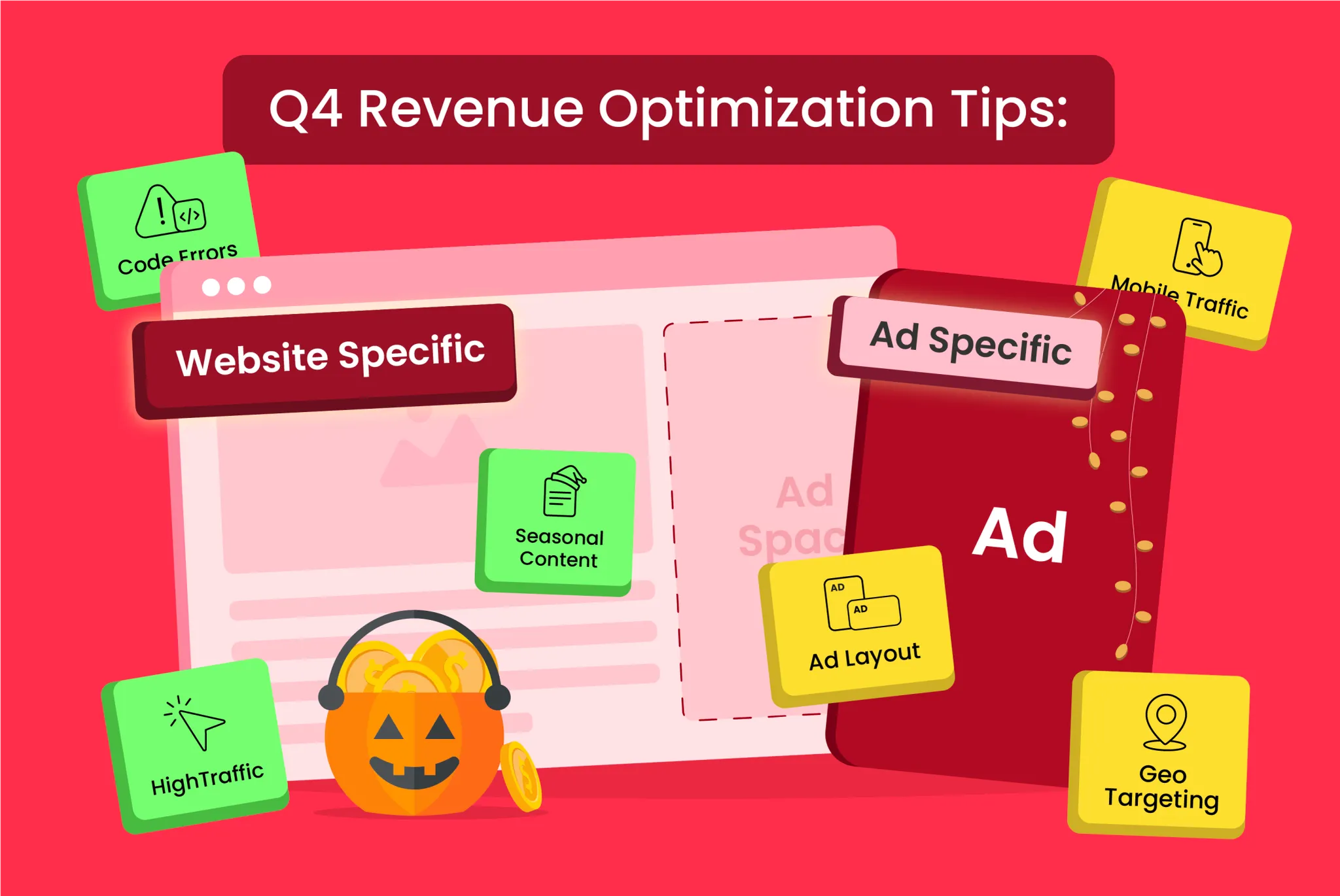
Key Takeaways on Revenue Optimization Tips:
- Q4’s surge in advertiser budgets offers a prime opportunity and can multiply returns beyond seasonal lifts. Strategic planning like reviewing last year’s trends and timing content updates around key events can help you monetize on the surge.
- Mobile optimization, which includes adding popular mobile ad formats and AMP, is critical as mobile traffic spikes during holiday shopping.
- Clean and update your ads.txt diligently. Remove old or redundant partners to prevent revenue leakage, streamline the supply chain, and signal trust to premium buyers.
- Bidder stack optimization and bid caching are advanced but essential Q4 tactics. This includes pruning underperforming demand partners and reusing high-value bids, respectively. By doing so, you can reduce latency, maximize impressions, and protect revenue in a competitive auction environment.
Q4 has just begun. Festivities are around the corner, with the nearest being Halloween. This is the time advertisers double down on their budgets, leading to comparatively higher eCPMs.
Even though Q4 events like Black Friday, Cyber Monday, Christmas, and New Year exhibit high buying activity, people spend on travel and book vacations around this time. Taking all of these factors into account—the will to spend and time to spare—it’s easy to see why Q4 is so profitable for online businesses.
However, just because Q4 is great does not mean it can’t be better. Here are some Q4 revenue optimization tips for publishers to get more traffic and fine-tune their monetization strategy to get even better returns than usual.
How to Approach My Q4 Revenue Strategy?
Even though Q4 is said to be the golden period for publishers, it’s not easy to predict the exact revenue you’ll make. However, publishers should start by checking the previous year’s trends. This should give you an idea of the increase in traffic and revenue you can expect.
With seasonal trends, a little planning goes a long way. For instance, the impressions are 40% higher during the 10- to 6-day window before Black Friday. Moreover, the average CTR also increases from 1.38% to 1.82% (Emplifi).
At the same time, users look for online product reviews. Planning a content calendar based on these insights and around specific events should help you make the most of Q4.
Ad-specific Q4 Revenue Optimization Tips for Publishers
1. Try High-impact Ad Formats
Ad formats like video, rich media, interstitials, interactive video, native, and sticky ads are known to be highly engaging. Since there is an expected rise in traffic this quarter, adding ad units for these ad formats can help boost user engagement. During Q4, advertisers also seek user engagement and are ready to spend more on better quality inventory. Hence, this could be a good time for publishers to start with these innovative ad formats. Drive more ad revenue in return for offering better user engagement.
2. Utilize Mobile Traffic
Most users prefer to use their smartphones for doing quick research. And this behavior increases during the holiday shopping season. Consequently, advertisers readily purchase mobile inventory. Keeping that in mind, publishers are advised to add popular mobile ad formats to their pages. Next, enable targeting on the ad unit level to attract a larger pool of advertisers. And finally, mobile webpages should be reviewed and optimized for page speed.
3. Enable Geo-targeting
Geographical or location-based targeting is when ads appear only to users from a specified location (country, city, and even down to the radius around a point location). Generally, advertisers with brick-and-mortar businesses go for geo-targeting. Geo-targeting should work for publishers with niche traffic from specific geo-locations. Geo-targeted ads are more personalized and tend to get better engagement, CTRs, and conversions. Enabling geo-targeted ads during the fourth quarter can improve your ad performance and inventory quality.
4. Optimize the Ad Layout Across Browsers
One of the important Q4 revenue optimization tips for publishers is to optimize the ad layout across browsers. While updating the ad layout, you can run A/B tests on different browsers to check how ads display on your website.
For example, our AdOps team has come across variations in the way ads are displayed on Safari and Chrome, especially for customized layouts. Taking these precautions will ensure seamless display of ads on your website, hence providing a smooth ad experience to the user.
5. Think Before Changing Your Monetization Partner
Many won’t say it, but we will. Do not change your ad monetization partner in Q4. Because if you do that, the time taken in negotiations and establishing the setup will eat up the revenue you could have earned in that duration.
However, if you are to change your ad partner, look for plug-n-play options or no-time setups. Moreover, check for their demand sources and ensure that they are aligned with your niche. On top of that, read their reviews so that you are sure that their setup won’t cause any lags that can lead to revenue loss.
6. Bidder Stack Optimization
Bidder stack optimization is probably one of the most important optimization techniques to make your website Q4-ready. It’s quite obvious. Timing is everything when it comes to Q4, plus, every lost impression can cost you dollars.
In this, you can first analyze previous Q4 performance and bids of the demand partners added to your stack, and remove those that aren’t contributing towards your KPIs. Only retain the ones that are relevant to your niche and offer good eCPMs. Next, optimize the bid timeouts. For example, if your chosen demand partners are providing bids within 2000 milliseconds, change it.
Making these changes will reduce the load on the browser/server by limiting the number of scripts per request, hence maintaining the page and ad delivery speed.
However, publishers should also note that reducing the timeout can also lead to reduced bids as some bids can be missed out due to occasional delays. So, by extending the timeout or not changing it at all, you can capture more bids, which leads to more competition, and subsequently higher revenue.
7. Cross-check and Update your Blocklist
Ensure that you have cross-checked your blocklist to make sure that you are comfortable with the ad categories and advertisers you have blocked.
Blocking certain ad categories (such as sensitive content, competitors, or disruptive formats) can protect your website and improve user experience by preventing irrelevant or intrusive ads. However, excessive blocking may reduce the variety and volume of ads eligible to compete, potentially lowering overall ad revenue.
Hence, you need to strike a careful balance by regularly adjusting the blocklist to ensure continued alignment with both revenue goals and user experience priorities.
8. Bid Caching for Increased Efficiency
Bid caching is another Q4 revenue optimization technique that can be advantageous for publishers during the festive season. In bid caching, a high-value bid, when not utilized for an ad unit, is stored for sometime & reused for other ad units on the same page.
This maximizes the revenue potential for each page view by ensuring that valuable bids are utilized appropriately. For publishers, this means making the most out of every bid placed on their inventory.
9. Multi-format Header Bidding
As we had discussed above, adding ad units of engaging ad formats will attract high-paying advertisers. It makes sense as these formats (like interstitials) command higher eCPMs compared to other ad formats due to their high advertiser-KPI deliverability.
So, if you are to use such ad formats, it becomes pertinent to expand header bidding to other ad formats like video, native, or even in-app (only if applicable), as each format brings in varied demand.
10. Update & Clean Ads.txt File
Ads.txt (Authorized Digital Sellers) is a simple text file that publishers place in the root directory of their websites. This file lists all the authorized ad networks and partners allowed to sell the publisher’s ad inventory. It was created by the IAB to combat fraud in digital advertising, such as domain spoofing and unauthorized inventory reselling.
If you want advertisers to confidently buy your ad space programmatically, you must prove that you are a legitimate seller.
An up-to-date ads.txt file does just that by signaling demand partners that you are authorized to sell the inventory. However, just updating it won’t make the cut; you also need to clean your ads.txt file by removing redundant/previous, unsold, or outdated partner entries. This streamlines the supply path, prevents revenue loss from unauthorized sellers, boosts RPM, and strengthens relationships with trusted partners.
11. Review Floor Prices
You should review your ad inventory with respect to floor pricing. Since advertisers are willing to spend more, this could be a good time to increase the floor price. Based on the industry trends, market rates, and advertiser requirements, publishers should update the price for their fixed inventory, too. Additionally, check the historic performance of ad units to discover which ones might benefit from the increased floor price.
12. Increase Inventory Quality
Apart from limiting the number of ads per page, you should also carefully select the ad units you want to make active this festive season. Removing poor-performing ad units (in terms of viewability or eCPMs) can improve the overall quality of your ad inventory. This step also increases the average eCPM of your ad space as you are technically raising the minimum eCPM bar for advertisers to access your inventory.
Website-Specific Q4 Revenue Optimization Tips for Publishers
1. Refresh High-Traffic Content
Blog posts or content pages that drive the highest traffic to your website are your goldmines. You need to keep them up-to-date in order to keep up with your competitors. This effort pays off not just in Q4 but also in the quarters coming ahead. Updating posts that already bring high traffic will increase their chances of showing up in a good position in SERPs. And as an additional benefit, this practice will improve your overall search authority, too.
2. Focus on Seasonal Content
Study historical data to find content/keywords that correlate with increased search volume during the holiday season. These pages are seasonal content. Use Google Analytics to find pages/content that get high traffic during a specific season (Q4, in this instance). Once you have the results, try to create similar content for this year as well. Google Trends shows real-time traffic stats on specific keywords for different niches and geographical locations. Use this free service by Google to find out other seasonal opportunities.
3. Don’t Redesign Your Website
Website redesign is not a one-step process. It is more like an ongoing, time-consuming project where updates keep coming up for a long time. Even small changes in design could have large and unpredictable effects on user experience and behavior. Hence, publishers are advised not to make any major changes to the sites during Q4. If anything goes south, chances are that it would create sizable losses. Instead, focus on optimizing content.
4. Fix HTTPS Status Code Errors
A major part of Technical SEO, HTTPS status code errors can also affect your website’s health. Hence, affecting the overall SEO score of your website. There are mainly three code errors that you need to take care of: Redirects (300–399), Client errors (400–499), & Server errors (500–599).
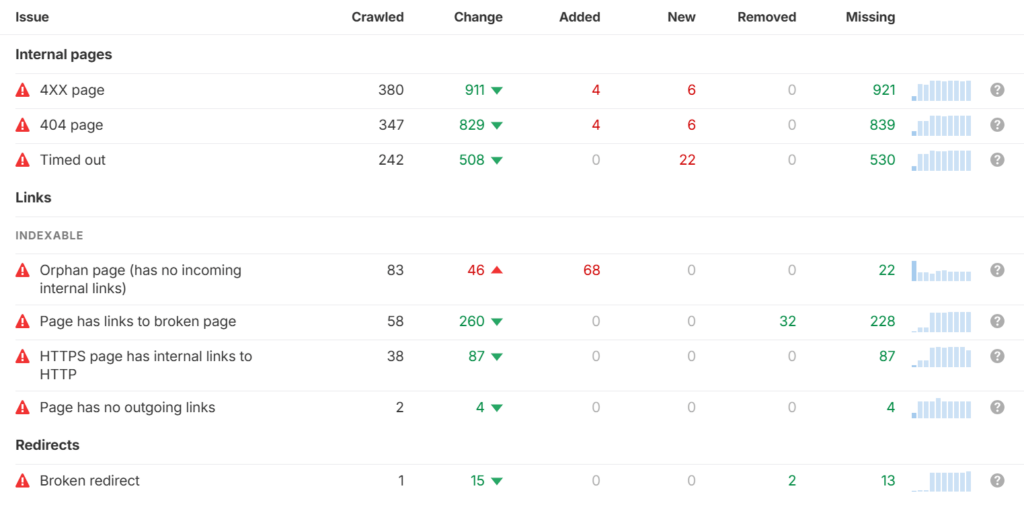
It is recommended that you conduct a site audit, identify the fault links, and remedy them accordingly. There are many tools available, such as Ahrefs, Check My Site (Chrome browser extension), and Screaming Frog, to run link audits. For example, you can fix 404 errors by correcting or redirecting broken/incorrect links. On the other hand, 5xx errors require the hosting provider’s support in general.
Such technical errors can affect the overall SEO of your website, which can affect its rankings and visibility. And, a loss in visibility would translate to a lesser number of ad impressions and, subsequently, diminished ad revenue.
FAQs on Revenue Optimization Tips
Tactics like updating and cleaning the ads.txt file, increasing the floor prices, and removing low-performing ad units can give a quick revenue lift.
You can track metrics like impressions, eCPMs, fill rates, ad viewability, engagement rate, and error rates.




1 Comment
Hi
I have enabled the Enable Geo-targeting for tracking the user thanks for sharing the information in brief…
Great job.