The popularity of video ads is undeniable, and in the coming years, video ads will become a driving force of digital advertising. Here is an overview of the types of video ads, along with examples, and criteria to follow while selecting video ads for your publishing business.
What a gust of wind is to a stagnant boat, video ads have been to programmatic advertising: powerfully accelerating the growth of the advertising industry. According to a Statista report, ad spending in the video advertising segment is projected to reach $207.52 billion in 2025.
In the Video Advertising segment, 82% of total ad spending will be generated through mobile by 2029. Moreover, the most revenue will be generated in the United States, with market volume touching $93.88 billion by 2025.
Looking at the growth of video advertising, we created this guide to help publishers with the types of video ads to earn more while maintaining the user experience.
How are Types of Video Ads Categorized?
Video ads are mainly categorized based on two types of video ad formats:
- Linear vs Non-linear video ads
- In-stream vs out-stream video ads
The first video ad format categorization is based on how the ad interacts with the user’s content consumption experience. On the other hand, the second category refers to the placement location of the video ads.
However, they can overlap each other. For example, overlay ads are in-stream non-linear video ads. These ads are played within a video player and float at the bottom. They are specifically designed to be viewed alongside the main video content, hence minimizing the disruption in content consumption.
Note: YouTube had discontinued overlay ads in 2023.
8 Types of Video Ad Formats for Publishers
1. In-stream video ads
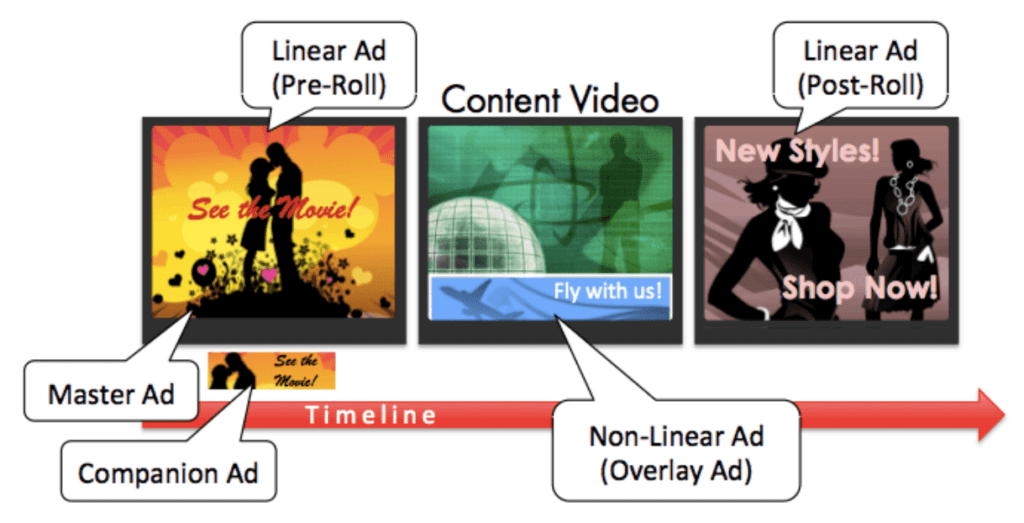
These ads run through a video player and are mainly placed where the video content consumption is intentional. For example, a user interested in watching a YouTube video. In-stream ads are integrated directly into the streaming content in the form of pre-roll, mid-roll, or post-roll ads.

Instream ads are further categorized into:
- Pre-roll Ads: These ads are shown before the main video content. A prime example of pre-roll ads can be seen on YouTube, where the ads play just before the main video begins. Pre-roll ads are generally utilized for building brand awareness.
- Mid-roll Ads: These ads mimic a typical linear TV commercial and are displayed in between the streaming content. Think of them as a long commercial you see during movie intermissions.
- Post-roll Ads: As the name implies, these ads are displayed after the video streaming is completed. This ad type only appears on videos that have opted for the ad revenue program. Examples include the ads you see at the end of a sitcom’s episode or YouTube videos.
You can refer to the image below to see how the ad placements work.

Depending upon the platform, in-stream ads can either be skippable or non-skippable. For instance, non-skippable ads on YouTube are between 15 and 30 seconds long. On the other hand, skippable ads can be of any duration, but users can skip them after five seconds.
Publishers are generally paid on a CPV basis for skippable ads. Here, whichever comes first – viewed the full video ad or interacted with it (clicks), the publisher gets paid.. However, non-skippable ads are paid on an impression basis.

In-stream ads are an effective way for publishers to earn guaranteed income, as these ads are generally immune to ad blockers. The reason lies in their streaming mechanism. Unlike the out-stream ads, these ads are stitched with the main video content and are streamed like one continuous video. This makes it difficult for the ad blocker to detect the ad call, hence the ads don’t get blocked.
If you are a publisher and are looking to run in-stream ads, contact AdPushup and get a free demo. Our in-stream video player, FrameRate, utilizes machine learning to fetch real-time and user-specific targeted bids. The video solution also comes with user experience-focused functionalities, ensuring only high-quality videos are served to the user.
Note: In-stream ads have both linear and non-linear ads under them. For context, linear ads interrupt the playback to display the ad, while non-linear ads run along the main video content without interrupting the playback.
2. Out-stream Video Ads
Out-stream video ads are deployed in places where the video content is not the source of user consumption. In simple words, these ads are found in between the webpage content or during transitions when browsing a website/an app.
Advertisers utilize outstream video ads to increase brand awareness, drive online purchases, target key consumers, and extend ad campaign reach. Outstream video ads can further be classified as:
- In-Page Ads: Use a dedicated video player to show video ads within content.
- In-Banner Ads: Update the existing ad units (dedicated to the banner) to show video ads as well.
- In-Text Ads: Designed to appear after a certain user engagement, click, 50% scroll, or hover over a specific part of the page.

These ads can take the form of any format. For example, the image below shows an autoplay interstitial video ad displayed by Forbes on their website. These full-page video ads can either be placed at the beginning of a user’s browsing journey or during natural page transitions.

Now, let’s explore linear and non-linear video ad formats.
3. Linear Video Ad Format
Linear video ads can be displayed between streaming video content or a CTV commercial. These ads are quite similar to the ads you generally see on linear TV: commercial breaks between series or movies.
The linear ad format can be categorized into pre-roll, mid-roll, and post-roll ads. Filling the entire video player screen, these ads run for 15-30 seconds, and users are not allowed to fast-forward through them.
Linear video ads, which are catchy, relevant to context, and fit the user’s profile, continue to function well for the majority of verticals and use cases, including beauty brands, sports, and entertainment, as well as edtech, finance, and real estate domains.
4. Non-Linear Video Ad Format
With users’ aversion to online ads and the growing use of ad blockers, online advertising has started prioritizing unobtrusiveness in its placement tactics. Nonlinear advertisements are one way to respond to the changing advertising scene.
These ads work primarily by transferring control to audiences: viewers may choose whether or not to engage with the nonlinear ad, and their content consumption is not interrupted in the process.
Non-linear ads run along with the video content without any interruption. The term “non-linear ad” can refer to a wide range of products. Still, the primary feature that unites them all is their ability to run concurrently with the main video content without disrupting the audience’s viewing experience.
They are categorized into the following:
- L-banner Ads: L-shaped ads that are displayed within the video player without blocking the content.
- Split Screen: Screen splits; one half shows an ad while the other plays the video ad.
- Pause TV: Static image ads that appear when users pause the video.
- Picture-in-Picture: Ads that appear in a small movable window while the main video continues playing.
- Non-overlay Ads: Ads that run alongside the video content without overlaying it.
Some Examples of Non-linear Ads
1. L-banner Ads

2. Pause TV Ads

5. Companion Ad Format
Companion ads are one of the types of video ads in which a secondary ad, often known as a “companion,” appears alongside the primary ad. These commercials are intended to compliment the primary ad by offering more information or reinforcing the brand message without being invasive.
6. Interactive Video Ads
As the name suggests, these are a type of video ads that allow user interaction with the video content, beyond passive viewing. In simple words, users can interact with the video ad, making the ad viewing more personalized and engaging.
Unlike traditional video ads, interactive video ads incorporate engaging elements like shoppable options or clickable links, a 360-degree view of a product, or gamification.


7. Native Video Ads
Native video ads work just like static native ads. They are designed to match the feel of the webpage they are being displayed in. It is one of the most non-intrusive types of video ads that publishers can deploy to increase their RPMs without hurting the user experience.
Native ads differ from standard ads: the former is intended to integrate seamlessly into the user’s path across a website or app. Visitors are still aware that these are advertisements, but they gel well with the publisher’s content.
You will see a lot of native video ads on social media platforms like Instagram and Facebook. These platforms opt for this particular video ad type to maintain the UI/UX, all while increasing user engagement.

Planning to implement native video ads? Contact AdPushup and get a free demo. Get access to multiple implementations of native ads that increase your RPMs and improve your user experience. On top of it, our bundle size reductions ensure that the ads do not affect the website’s core web vitals.
8. Rewarded Video Ads
In this model, users willingly opt to watch a short video ad (usually 15-30 seconds long) in exchange for a tangible incentive within the app or platform.
This incentive can include everything from in-game currency and bonus content to limited access to premium features. For example, many microdrama apps like DramaBox and ReelShort show rewarded video ads to their users in exchange for digital coins that they can use to unlock new chapters.

Even famous games like Temple Run offer rewarded video ads to the players in exchange for reviving the character or accessing free perks.

This opt-in nature promotes a good user experience, setting it apart from other disruptive advertising styles. It also encourages increased engagement and completion rates, resulting in a desirable advertising inventory for publishers.
3 Tips to Choose the Best Type of Video Ads
You can consider the following criteria while deciding to implement the best type of video ads for your publishing business.
Publishing Business Type
First things first. Is your publishing business an app or a website? If it’s an app, then consider deploying rewarded video ads or mobile interstitial ads. You can also choose pencil floating ads (one of our innovative ad formats) for your mobile users to minimize the ad experience disruption. In-app placements can also include native video ads to further complement the user experience.
On the other hand, web publishers benefit from in-stream ads, in-feed video formats, or non-intrusive native ads that blend seamlessly with their content to maximize engagement and revenue without disrupting the user experience.
Content Type
Content-heavy websites can opt for in-feed ads to engage their users. Such websites command high session durations, which can work in the publisher’s favor in increasing their eCPMs. Many news or entertainment/lifestyle publications deploy in-feed ads.
Expert Opinion!
Pre-roll, mid-roll, and post-roll skippable in-stream ads are more likely to be an appropriate choice to maximize revenue, especially on content-intensive websites. In-page or in-banner are out-stream ad types that are an excellent choice when it comes to monetizing sites or apps that contain a lot of non-video content and do not want to interrupt the user experience. Interactive video advertisement is also a powerhouse, particularly in cases where you need to increase engagement and conversions. All in all, it is a matter of the proper combination of ads that would suit your audience and would be in line with your revenue expectations.Baris Zeren | CEO, BookYourData
Monetization Goals
Which revenue model are you planning to follow – CPM, CPA, or CPV?
Skippable video ads can either follow CPM or CPV, depending on the user’s action (video completion or interaction). However, non-skippable ad formats like bumper ads only follow CPM as a payment model.
In case you wish to improve your video ad revenue, then give us – AdPushup – a try. We offer Multi-Format Ads wherein if video doesn’t win the impression, then a banner or native can take place to avoid loss of revenue. But our offerings don’t end here. You can explore our innovative ad formats, and get a free demo with us as well.
Key Takeaways on Types of Video Ads
1. Some of the video ads include in-stream ads, out-stream ads, native video ads, and interactive ads.
2. Each video ad format has its purpose behind its placement. For example, in-stream video ads are generally used between video content to provide a seamless video-watching experience to the users.
3. On the other hand, out-stream ads are deployed on pages with no video content. This type of video ad can take the form of in-text ads or in-feed ads.
4. However, not all types of video ads suit every publisher. For example, gaming and microdrama apps may benefit from rewarded video ads, while other apps may benefit from mobile interstitial ads. Similarly, websites may see higher eCPMs from in-feed or in-stream formats.
5. At the end, you should select formats that match your content style and audience expectations for better engagement and monetization.
Frequently Asked Questions:
Video ads are short videos containing a brand’s message to its users. Programmatic advertising made it possible for publishers to target, manage, and scale video advertising strategy just like their display ads.
– Keep the audio off
– Reduce page loading time
– Try video header bidding
– Don’t overwhelm users
– Set up an ad ops team
– Consider creating video content
– Maintain minimum viewability standards
Video advertising allows you to engage with audiences that ignore banner ads or text. Moreover, video ads offer higher eCPMs compared to static ads. Also, their storytelling ability makes them more engaging, hence complementing the user’s browsing experience.
– Instream Video Ads
– Outstream Video Ads
– Interactive Video Ads
– Pre-roll Video Ads
– Mid-roll Video Ads
– Post-roll Video Ads
– Overlay Ads
– Non-Overlay Ads