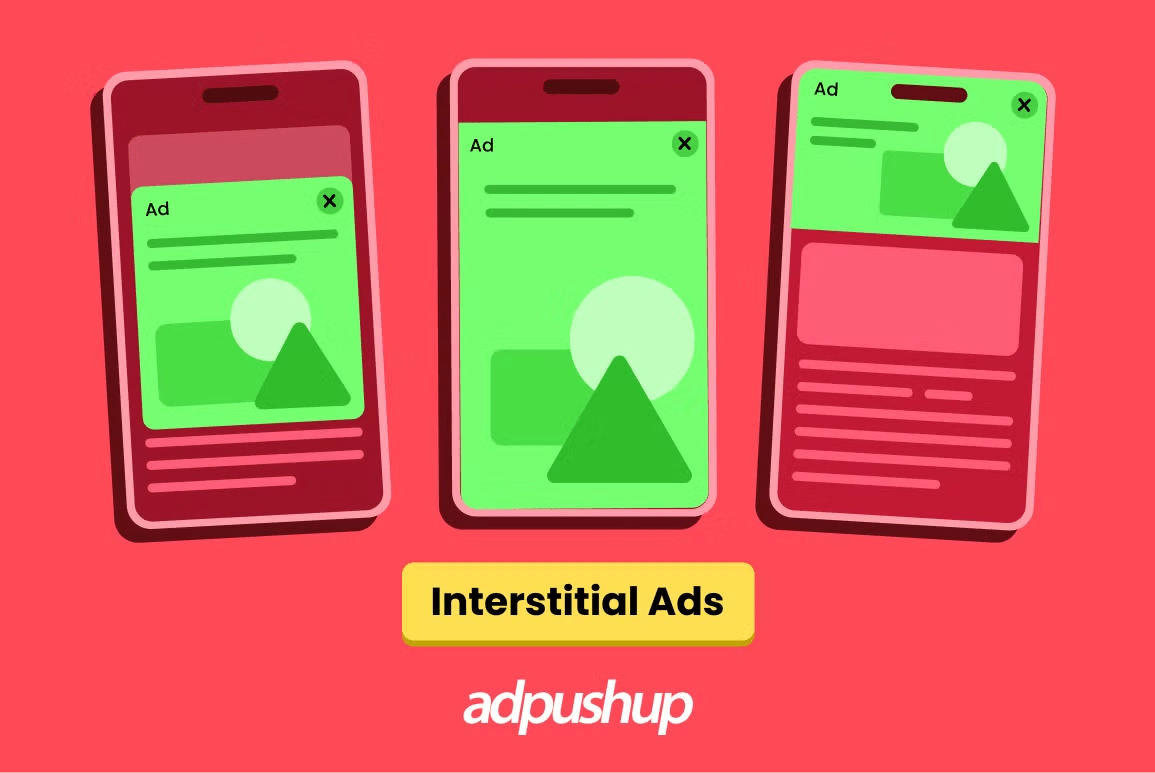
Interstitial ads are full-screen ads that typically appear at the natural transition point to catch user attention and promote products/services. But is this attention-grabbing ad format a stroke of genius or just another disruptive ad format? Let’s take a closer look at what interstitial ads are, what makes them so effective, and some best practices for publishers.
In a world obsessed with scrolling, swapping, and tapping away to the next best thing, interstitial ads strategically make their presence known and get user attention.
With 57% of gaming app developers using interstitial ads in their app monetization strategy, it’s clear that the bold and unavoidable nature of these ads is effective and working for many publishers out there. If you are a publisher looking to boost engagement and revenue, interstitial ads have proven to have 18 times higher click-through rates (CTR) as compared to other ad formats.
As a publisher, it is important to strike a balance between visibility and user interest. To make sure that these ads are enhancing the user experience and not disrupting, we have prepared this article where you’ll explore everything you need to know about interstitial ads.
What is an Interstitial Ad?
Interstitial ads are full–screen ads that appear at various transition points within the app or a website. They cover the entire display screen of a user to grab the user’s attention. They are usually shown between the content and any activity that the user is performing during their browsing journey. Their full coverage attribute makes them different from other ad types like pop-up, native, and banner ads.
Full-screen ads are commonly displayed on mobile devices. However, many desktop websites also show interstitial ads.
Now that you know what interstitial ads are, let’s explore how they work.
How do Interstitial Ads Work?
As explained above, interstitials appear during organic transitions on a webpage or mobile application. They can appear between game levels, while browsing products online, video streaming, etc. Let’s see step-by-step how they work:
- Publishers integrate interstitial ads into their websites or mobile apps with an automatic trigger during high-traffic moments or any common user transition.
- Playing by their nature, interstitial video ads appear during genuine pauses in user activity, such as between game levels, after completing an article, etc.
- A legit interstitial ad has smart frequency capping; it appears once per session, triggers only after a specific action taken by a user.
- The ad should always be distinct from the original content and should not confuse the users.
- There are some predefined guidelines set by Google that we have discussed below in the article that a publisher must comply with to avoid getting penalized.
What are the Types of Interstitial Ads?
Advertisers experiment with different types of interstitial ad formats to bring more diversity and engage users. Such formats make the ads less intruding and reduce the website bounce rate. Some of them are:
- Full-screen interstitial ads: These ads cover the whole screen while the user is exploring a website, making it impossible to ignore them. They mainly take place during organic transitions to make the ads less intruding.
- Exit intent interstitials: As the name suggests, exit intent interstitials appear as a pop-up when a visitor is about to leave a website. E-commerce websites have fully utilized them to increase their conversion rates. These are shown when the user leaves their cart without completing the purchase. The motive is to offer last-minute discounts to complete the payment or present tempting offers to drive sales.
- Video interstitial ads: These ads feature videos to advertise their message. They are quite common on YouTube, travel, and gaming websites.
- Mobile interstitials: These are interstitials that are specifically designed for mobiles. They generally show up during natural transitions while using mobile applications. For example, you might be shown umbrella ads while using the weather app during rain.
- Interactive interstitials: Lastly, interactive interstitials are ads that are specifically created to increase user participation and engagement, as well as collect data for advertising. They are generally in the form of short surveys.
Top 5 Examples of Interstitial Ads
Interstitial advertising can be found on almost all major platforms, including gaming sites, social media, streaming services, and emails.
- Interstitial ads on websites: Many websites use interstitial ads to promote featured content, special offers, subscriptions, webinars, or even sign-ups. This is very common in digital news websites.
- Interstitial ads on social media: These ads are becoming more popular on various social media platforms due to the compelling and unique experiences they offer. For example, Instagram has seamlessly integrated these ads into its story, posts, and reel features. Similarly, SnapChat has also integrated these ads into its Discover feature to deliver captivating content.
- Interstitial ads in streaming services: Interstitial pop-ups have become a common sight in streaming services. The OTT platforms use these ads to achieve two goals – promote premium content, an anticipated show or sponsors, and generate revenue. The best example is Disney+. It cleverly places interstitials between the shows to highlight its exclusive content and create hype to entice users to watch it.
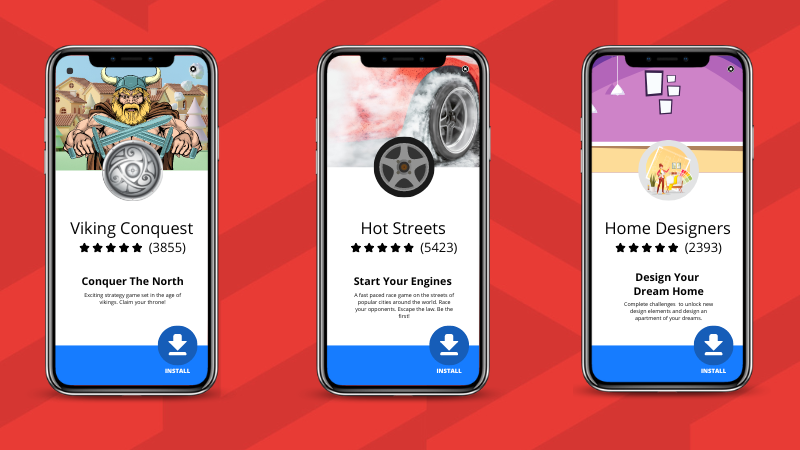
- Interstitial ads in gaming: Game developers extensively use interstitials to promote other games or in-app purchases. Play almost any game, and you will see that at almost every turn, it offers extra rewards, exclusive deals, power-ups, and much more in exchange for watching these ads.
- Interstitial ads in emails: Marketers have started incorporating interstitial pop-ups to make their email advertising efforts more effective. Many clothing brands use these pop-ups to inform their subscribers of limited-time deals, exclusive offers, or flash sales. Interstitials have enabled advertisers to convey their message without bringing users to any website.
Benefits of Interstitial Ads for Publishers
Brands like Pinterest and Airbnb have reported an increase in app installation by 100% and 300%, respectively, by optimizing interstitial ads. Due to this, most publishers tend to include interstitial ads in their ad inventory, knowing marketers and advertisers are ready to pay a sizeable amount for interstitial ads.
Here are reasons why publishers should choose interstitial ads:
High click-through rate
With interstitial ads, the users have two options: either to click on the ad to check out the offering or to click on the close button and continue ahead. Facts say that interstitial ads have a higher click-through rate than banner ads.
Compelling and convincing
A user is least likely to be able to avoid an interstitial ad as it covers the entire device screen. Hence, publishers can always show high CPM and rich media ads here for a better impact on users.
Solves banner blindness
Because a full-screen ad would be pretty hard to ignore, the user might not ignore the ad displayed on the screen, hence reducing banner blindness.
High Revenue
Interstitial ads are used in high-intensity campaigns where high user engagement is critical. To achieve this goal, advertisers pay a premium for ad inventory. Publishers control the frequency capping, so they can charge a premium for the ad space.
What are the Challenges with Interstitial Ads?
As mentioned at the beginning of the article, interstitials are controversial. While they benefit publishers and advertisers, they can also irritate users.*-
Some disadvantages of interstitial adverts include:
1. Penalty By Google
The major controversy around interstitials is that Google is penalizing them. The tech giant sees these ads as a disruption to the user experience because they cover the whole screen. Bombarding a webpage with interstitial pop-ups can lead the user to abandon the page, which increases the bounce rate, hindering its main intent—conveying information to the user.
2. Ad Fatigue
You are reading an online review of an upcoming movie, but see that ads for booking movie tickets keep appearing. You see them once, twice, or thrice, but on the fourth time, you abandon the page and read on another site. This is what we call ad fatigue.
Ad fatigue is a phenomenon among internet users in which they lose interest in a website, game, or streaming platform due to the constant popping up of ads. In simple terms, when users see too many similar ads, they get annoyed and become non-receptive to them. User satisfaction tends to decline with overexposure, defeating the main purpose of an ad.
The best way to tackle ad fatigue is to use frequency capping, where marketers can decide how many times a user will see the interstitial ads to maintain a positive user experience.
3. Disrupting User Experience
Suppose you are reading your favorite novel online. You see that with every scroll, an ad appears. You will engage with the same ad once, twice, or even thrice. But if these ads keep coming, will you keep reading your online novel? Of Course not!
If not placed strategically, interstitial ads can be a huge turnoff for users visiting your website. The reason? Firstly, users are forced to see them as they pop on their screen out of the blue, and secondly, many interstitial ads have to be seen for a specific duration before the close option appears.
Poorly implemented interstitials can impact the retention rate and disrupt the content flow, leading to dissatisfaction and negative feedback.
4. Slow Loading Time
Due to large graphics and complex elements, interstitial ads can be relatively heavy compared to other ads. This can slow their loading time, affecting the website’s core web vitals.
Heavy files can lead to latency issues, prompting the user to move away from the website and causing revenue loss.
Top 4 Tips to Optimize Interstitial Ads
1. Don’t Hinder With Users’ Tasks
Nobody likes getting interrupted. The same is the case with ads, especially while working on something like filling out a form. Hence, interstitial ads should be avoided between important user activities or interactions. However, if the task is considered unimportant (leisure activities like watching a series) and you want to show an ad there, make sure the ongoing task is paused while the user receives the ad.
2. Allow Appropriate Loading Time For The Ads
Interstitial ads are large-sized ads with rich media and heavy graphics. This means these kinds of ads will take a good amount of time to load on the users’ screens. Now, you wouldn’t want your users to wait for an ad to load.
Hence, in order to avoid such problems, make sure the ad is rendered quickly. Even better, start loading your ad before it’s called. So when the time comes to display it, it won’t take much time.
3. Do Not Flood Users’ Screens With Ads
This is applicable to all kinds of ads. As in the case of interstitial ads, which cover the entire screen, showing too many ads in a short time interval is most likely going to degrade their user experience and eventually lead to a lower click-through rate (CTR).
4. Make Sure Interstitial Ads Are Right For You
Interstitial ads might sound like a good idea when it comes to getting impressions from users. However, before running them on your platform, make sure you know that these ads are right for you.
As we discussed, interstitial ads work best when placed between transition points, i.e., when the user is expecting a break. By doing this, the user might take a good look at the ads and click on them. Examine the app or site flow to find the best place and time to display interstitial ads.
Banner Ads vs Interstitial Ads
Banner ads and interstitial ads are two of the many formats used in programmatic advertising. However, these two ad formats are quite different and are used according to the goals set by the advertiser.
| Feature | Banner Ads | Interstitial Ads |
| Placement | Banner ads appear on the edges of the webpage or apps, i.e., top, bottom,and sides. | Full-screen ads that appear at transition points |
| User Experience | Subtle and less intrusive | Intrusive but attention-grabbing |
| Engagement | They can cause banner blindness | Users have to interact to click or close the ad. |
| Ideal Use Case | Brand Awareness | High Impact Campaigns |
| Customization | They are dynamic and get refreshed after each impression | They include rich media and strategically timed display |
| Ad Fatigue Risk | Lower ad fatigue due to background presence | It can cause ad fatigue if overused or poorly timed. |
Did you know that Google can also penalize advertisers and publishers for using interstitial advertising improperly? Here’s how:
Google Penalties for Interstitial Ads:
Google’s main goal is to create a healthy advertising ecosystem that benefits users, publishers, and especially users. Back in 2015, Google stood up against full-page mobile apps that were aggressively pushing app installations. In 2016, Google became stricter against mobile interstitial ads to improve the user experience. Now, according to the new rulebook, Google penalizes the following types of Interstitial ads:
- Intrusive Pop-Up Ads
- Interstitial ads while loading or exiting the page
- Full-page ads that cover the desired content
- Standalone interstitial ads that require the user to close them to access the main content.
- Ads that serve on every break, i.e., ads that are repeating or recurring
So what kind of interstitial ads are Google-approved? Let’s explore interstitial ads that are legally sound and Google-approved:
Interstitial Ads Penalty Exceptions
Although interstitial ads are not exactly Google’s favorite, there are instances where Google allows and even prefers these ads over other ad formats, such as:
1. Age Verification Interstitial Adverts
If a website hosts adult-related or narcotics-related content, it is encouraged to use interstitial ads as a doorway for age verification and a related disclaimer. In many countries, such interstitials are mandated by law. A whois lookup can provide insights on the ownership of such websites to ensure they comply with these laws.
2. Page-to-Page Interstitials
Google accepts interstitial advertising appearing when users migrate from one page to another within the same website. However, if the webpage is searched organically on Google, no interstitial ads should appear while it opens.
3. Cookie Usage Interstitials
Cookie usage interstitials are a type of interstitial advert that shows up as soon as you land on a website. These ads generally inform a user about using cookies for data collection and require their consent. Many countries have made it mandatory for websites to show interstitial ads explaining their cookie policy to empower the user and give them control over their data.
4. Crossing a Paywall
You will come across many websites that show interstitial paywall ads to entice consumers to pay for their content. This is especially used by media outlets like the Wall Street Journal or National Geographic, which invest money and resources to curate their content.
How Publishers Can Avoid Getting Penalized
Interstitial ads sound intriguing. However, if not used properly, penalties can be incurred. The important thing with these ads is timing. They shouldn’t disturb the users and their experience while accessing an important webpage for information or while transacting.
The best and easiest way to avoid penalties on interstitial ads is to check and adhere to Google Policies before running them on your site or app. It is always useful to stay updated with Google’s Developer Policies Program to stay compliant with interstitial ads
How Interstitial Ads Affect User Experience on Desktop?
One thing to keep in mind is that interstitial ads can be annoying on a desktop, so one has to be thoughtful about their use. On the desktop, the display screen is big, and finding the close or continue button on the ad becomes a task for the users. On the other hand, with a mobile device, the close button [or X] is too small to locate and tap.
However, many publishers show interstitial ads on the desktop version of their website. Similarly, if you have a method that is working well for your desktop website without getting penalized, you’re in good practice. If not, you should reconsider planning interstitial ads on your desktop web pages.
Interstitial Ads Challenges on Mobile
Even when displaying interstitial ads on mobile devices, you need to make sure the ads are not interrupting the user in any way. They should appear between natural pauses. For instance, an interstitial ad can be displayed after the end of a gaming session or when the user is switching between articles.
Pro tip: If your site or application involves a lot of direct user interaction (like clicks involved while playing Candy Crush), do not put an interstitial ad between those interactions. This may lead to ads getting clicked by a user, unintentionally causing an invalid activity. Worse, you’ll just end up hampering your users’ interaction with your website/app, eventually losing them (maybe forever).
Can Publishers use Vignette Ads?
Vignette ads and interstitial advertisements are like two sides of the same coin. The only difference is their timing of popping up – interstitials appear at the beginning or in the middle of web browsing. In contrast, vignettes appear when the visitor is leaving the site.
Google has not been clear on whether it will penalize vignette ads similar to interstitial adverts; they do seem to violate Google’s guidelines.
Interscroller Ads: An Alternative To Interstitial Adverts
Interscroller ads are one of the newest ad formats in the advertising world. Many advertisers and publishers have started adopting this trend to minimize the user experience disruption that comes with interstitial ads.
Interscroller ads appear as a scrollable ribbon-like strip within the website. This format allows several ad units to be displayed at the same time, giving advertisers more page area and ad space to work with. It also allows users to see multiple ads at the same time.
Users can go through the content while viewing the ad, and with no interruptions in the content flow, interscroller ads easily comply with the guidelines.
AdPushup
AdPushup, an ad revenue optimization platform, helps publishers maximize earnings through innovative formats like interstitial ads.AdPushup ensures these ads comply with Google’s policies while leveraging programmatic tech to deliver premium demand. With features like:
- Layout Optimization
- Adblock Recovery
- Smart Mediation
- And higher CPMs
AdPushup’s innovative ad formats are designed to boost visibility and revenue. Know More
Key Takeaways: (Quick Summary)
- Interstitial ads’ unavoidable nature leads to significantly higher click-through rates (CTR) (18x higher than other formats) and can command higher CPMs, making them attractive for boosting revenue and engagement.
- These ads have high CTR and revenue. Interstitial ads help solve “banner blindness” by being impossible to ignore and are highly compelling, making them effective for high-impact campaigns and brand awareness.
- Google allow only certain types of interstitial ads, which include age verification, page-to-page transitions within the same site (but not on initial organic search page loads), cookie usage consent forms, and paywalls for premium content.
- To avoid penalties and maintain a positive user experience, avoid placing interstitials during critical user tasks, ensure fast loading times, and avoid flooding the screen with ads.
- Vignette ads are a type of full-screen ad that, like interstitials, cover the entire display. The key difference between interstitial ads and vignette ads is their timing. Vignettes appear when a visitor is leaving the site
- Interscroller ads are a newer ad format that appears as a scrollable ribbon-like strip within the website content. They are designed to minimize the user experience disruption, which is common with interstitial ads
Frequently Asked Questions
A: Interstitial ads are ads that cover the entire content on the user’s screen to increase ad visibility. They generally appear during a transition from one webpage to another.
A: Pop-ups cover a very small portion of the screen, which makes them less disruptive than interstitial ads that cover the whole screen. This makes interstitial ads more intrusive compared to pop-ups.
A: Interstitial ads are an advertiser’s first choice if they wish to run a high-intensity advertising campaign. If used within Google’s guidelines, interstitial ads can bring great results to your ad campaigns within a short time frame.
Some characteristics of interstitial ads include:
– Cover the whole screen
– Placed between natural breakpoints during web browsing
– Aesthetically designed to grab the user’s attention
– Includes interactive elements to boost user engagement
– Immune to ad blockers
According to Google, the best frequency capping for interstitial ads is one per hour for each unique visitor. This ensures that the content flow is not disrupted, plus the user doesn’t watch the same ad on repeat.