
Key Takeaways: Mobile Video Ads
- Mobile video ads are designed for smartphones and deliver higher engagement and eCPMs than static formats.
- Publishers can choose from a range of ad types like native, in-stream, outstream, rewarded, playable, and vertical ads.
- Rewarded and playable ads perform especially well for app and gaming publishers, attracting user interaction and higher ad revenue.
- Strategic placement of mobile video ads, backed by heatmap analysis and A/B testing, can increase viewer retention & boost your ad revenue.
- The rapid rise of mobile video ad spend reflects shifting consumer habits and the importance of partnering with strong video ad networks.
With billions of people worldwide using smartphones and tablets to consume media, mobile video ads provides a powerful way to reach and engage audiences wherever they are.
According to an IAB Report, the total U.S. digital video ad spend in 2024 touched $64B, showcasing an 18% year-over-year increase. Moreover, it is projected to reach $72B in 2025, representing a 2-3x faster growth than total media.
Observing the meteoric rise of mobile video ads, we have crafted a primer for you, publishers, to know the ins and outs of mobile video advertising. We will not only cover the basics, but also provide real-life examples and actionable tips to help you increase your video ad revenue.
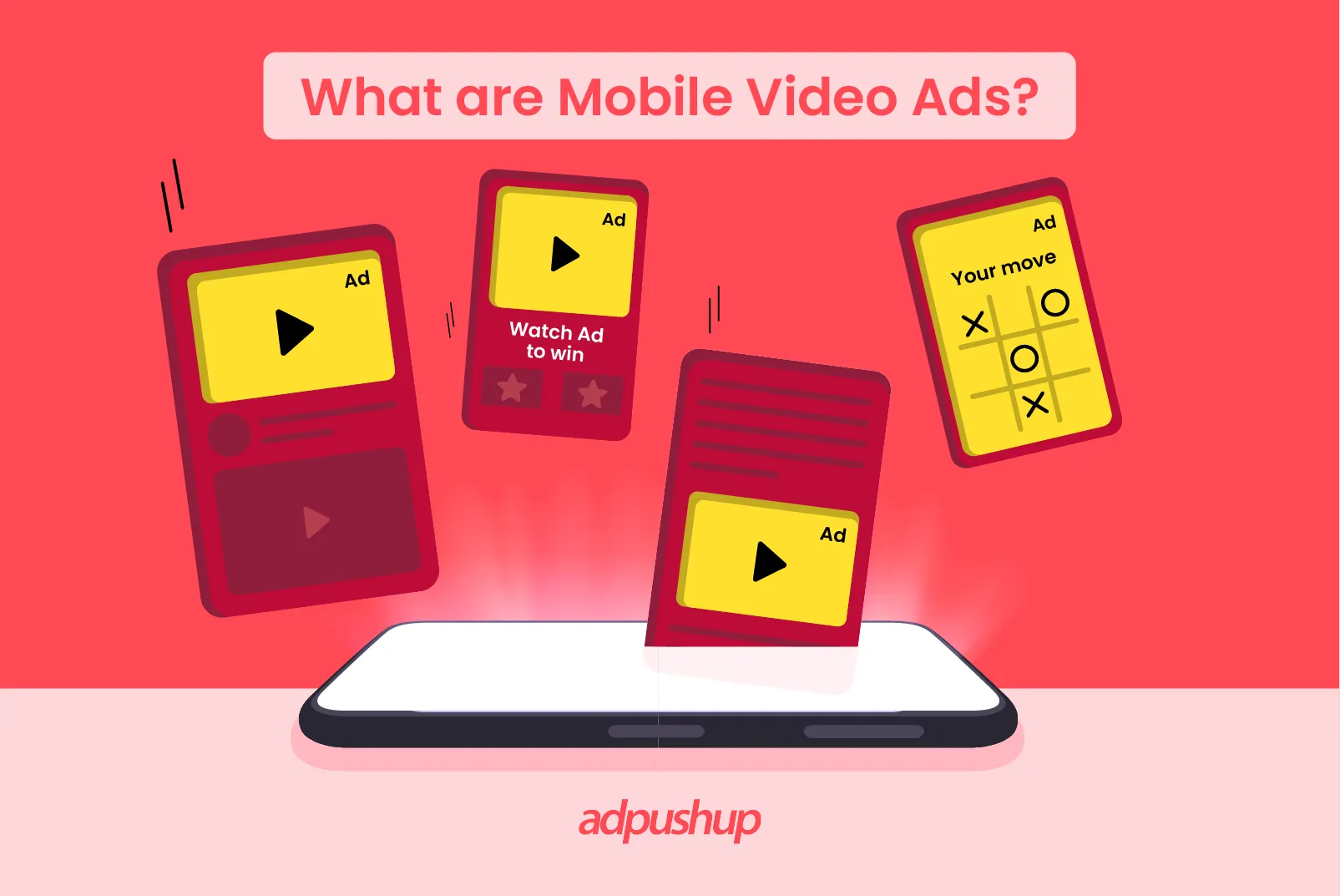
What are Mobile Video Ads?

Mobile video ads are short, engaging videos designed for smartphones and tablets. These ads can be displayed on social media platforms, mobile apps, and websites, and are designed to capture viewers’ attention and encourage them to take action.
Mobile video advertising is a subset of video advertising that involves undertaking advertising initiatives via video ads made for mobile phones.
These ads can be displayed on social media platforms, mobile apps, and websites and are designed to capture viewers’ attention and encourage them to take action.
What are the Types of Mobile Video Ads? (With Examples)
There are several different types of ads you can use to reach your target audience with mobile video advertising. Here are the most common types:
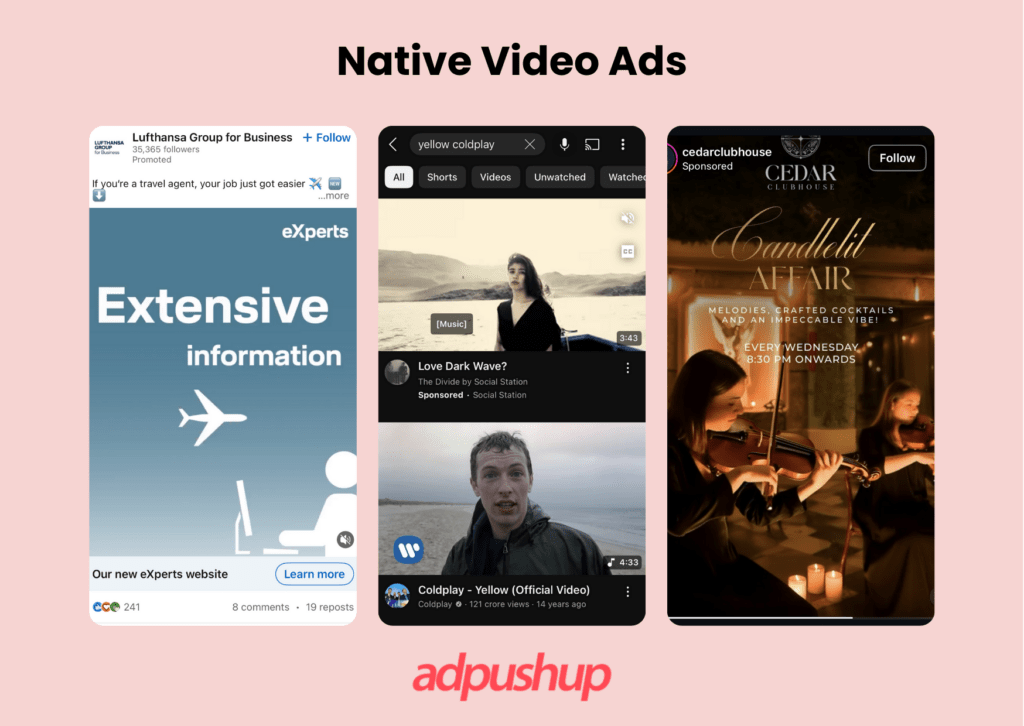
1. Native Video Ads
Platforms like Facebook, Instagram, LinkedIn, and Snapchat offer a variety of video ad formats that can be displayed to users while scrolling through their feeds. While the sizes and placements may differ, they blend-in to complement the user experience. In simple words, they are designed to match the user interface of the app/website to avoid being intrusive.
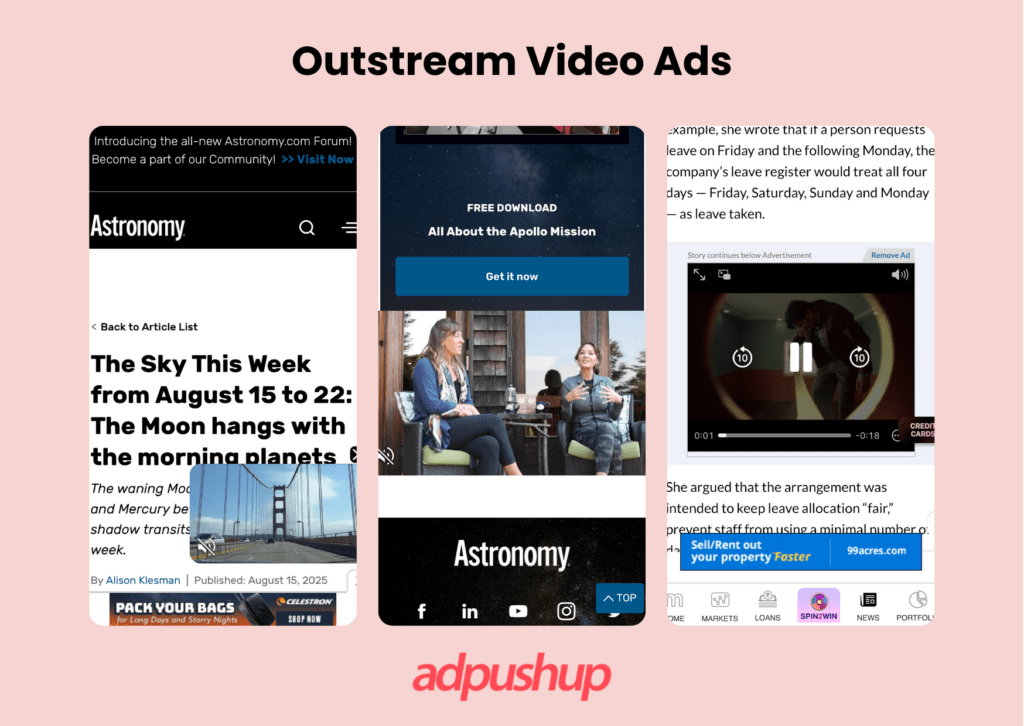
2. Outstream Video Ads
Outstream video ads are displayed outside of video content. These ads can be displayed within articles or other content and are designed to be less disruptive than traditional mobile video ads. Some of the outstream video ad formats include in-feed and in-article ads.
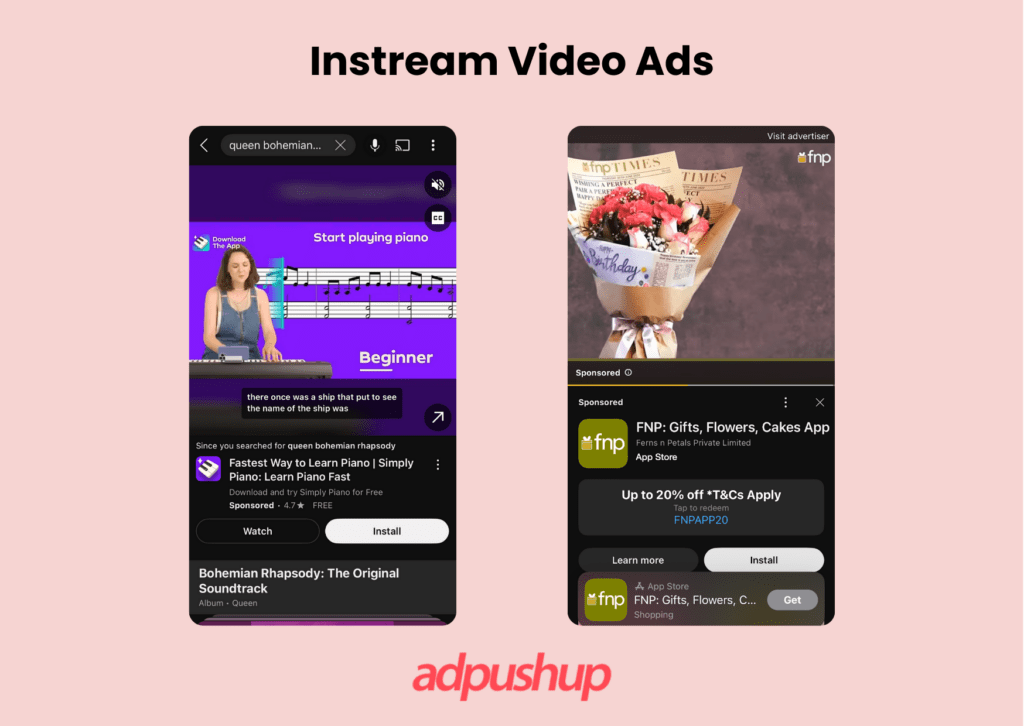
3. Instream Video Ads
In-stream video ads are displayed within the video content. These mobile video ads come in a variety of forms, such as pre-roll, mid-roll, post-roll ads, and bumper ads. However, you can also run an in-stream ad as an accompanying content player (type of in-stream ad) on content-intensive websites.
If you are a publisher looking to run in-stream ads, contact AdPushup for a free demo. Our in-stream video player, FrameRate, utilizes machine learning to fetch real-time and user-specific targeted bids. The video solution also comes with user experience-focused functionalities, ensuring only high-quality videos are served to the user.
4. Mobile Interstitial Video Ads
Mobile interstitial ads are designed to cover the whole screen of the user. Deployed at natural transition points within the website/app, they are excellent at capturing the user’s attention. Due to this, they command higher eCPMs compared to traditional formats. However, if misused, it can gravely affect the user experience.
5. Rewarded Video Ads
Rewarded video ads are a non-intrusive, short-form video ad format that establishes a value exchange between a publisher and a user. In this, users get to select to watch a video commercial in exchange for an award, such as access to a new gaming level or the full version of an article or narrative.

6. Playable Ads
Playable ads are frequently utilized in in-game apps. Such video ads in mobile apps allow users to experience the app briefly. This type of mobile video advertising is gaining popularity because it makes people feel like they are playing a game while interacting with the ad, which in turn increases the time they spend engaging with it.

7. Interactive Video Ads
Interactive video ads are a type of mobile video advertising in which viewers actively interact with the ad content rather than passively viewing it. Instead of merely watching the ad, viewers can engage with it via clicks, swipes, or choices, changing passive viewing into an active and engaging experience.
8. Vertical Video Ads
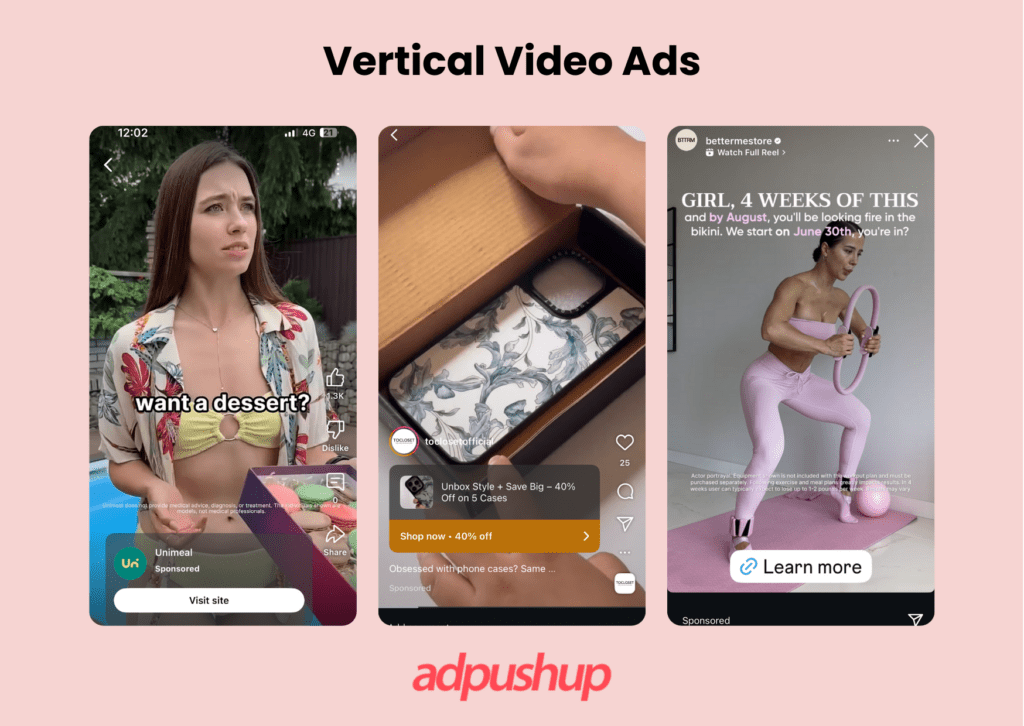
Vertical video ads come in 9:16 format, taking up to 75% of the screen on mobile devices, with the user’s organic content visible below the video. These ads also leverage natural phone behavior: users see a larger, more appealing creative when holding their phones upright. However, marketers should be aware that if a device is turned sideways, black bars will appear beside the video, limiting its visual impact.
What are the Benefits of Mobile Video Ads?
1. Variety of Ad Formats
Mobile video ads cater to every publisher, whether they have an app or a website. Recognizing the varied user behavior across platforms, publishers can select from multiple options like vertical, horizontal, in-stream, out-stream, reward-based, and native video formats to match their audience’s consumption habits.
2. Higher eCPM
Mobile video ads often offer higher eCPMs to publishers compared to mobile static ads. The reason is quite logical: video ads offer higher user engagement metrics compared to static ads. Hence, the higher pay.
3. Enhanced User Experience
Mobile app video ads tend to have an upper hand when it comes to enhancing user experience. Let’s take playable ads or interactive video ads. What makes them attractive to both publishers and advertisers is their ability to convert passive viewing into active participation. This, in turn, engages the user, enhancing the UX.
Traditional Media Ads vs Mobile Video Ads: Key Differences
| Feature | Traditional Media Ads | Mobile Video Ads |
| Length & Structure | Longer, formal, for passive viewers | Shorter (seconds to ~1 min), designed for quick consumption |
| Interactivity | Static, no direct user engagement | Includes CTAs, swipe-ups, clickables for active interaction |
| Viewing Orientation | Made for landscape TV screens | Optimized for vertical/portrait phone use |
| Audience Targeting | Broad audience segmentation | Precise targeting by demographics, interests, and behavior |
| Formats | Limited (TV spots, print) | Multiple ad formats adapted for apps, social, and mobile platforms |
3 Factors Affecting Mobile App Video Ads Revenue
1. Mobile Video Ads Format
The foremost factor affecting your mobile video ads revenue is the type of ad format you use. Certain video ads, such as interstitial ads or playable video ads, offer higher eCPM compared to conventional video ad formats. However, rewarded video ads offer the highest eCPM out of all video ads, between $10-$50 per 1000 impressions (Business of Apps).
2. Platform Type and Genre
Your income would also depend on the platform where the ads are being shown – apps or websites. Websites that smartly use mobile-optimized interstitial ads can significantly increase their ad revenue. However, it is the app publishers who are at an advantage here. They can utilize high-earning formats, such as rewarded video ads and playable ads, which can significantly increase overall ad earnings.
Coming to the genre, gaming apps beat all others. The reason is the same as above: they use rewarded ads and playable ads.
Compare this to a news or information app that gives users articles and videos. Rewarded video ads are more challenging to deploy in such settings, and an interstitial ad may deter users who aren’t already deeply engaged with the app’s content.
3. Mobile Video Advertising Demand Partners
From where are you sourcing video ads? The answer to this question can determine how much money you will get for video ads.
Joining a small mobile ad network with limited demand will eventually give you lower eCPMs. However, joining ad exchanges like Google AdX (via AdTech partners like AdPushup) will expose your inventory to numerous high-paying advertisers, hence increasing your overall eCPMs.
7 Actionable Tips to Increase your Mobile Video Ad Revenue
1. Direct Deals for Premium Placements
Rather than putting all of your inventory up for bidding, save the premium ones for direct deals or programmatic guaranteed. Through it, you can get eCPMs that would justify the value of your premium inventory, hence increasing your mobile ad revenue.
2. Mobile Optimized Websites
Apps are mobile-optimized by default. It is the websites that publishers need to take caution with. Using mobile video ads on websites can become a troublesome task if the website is not mobile-optimized.
Even if you are to run ads on a website, your UI/UX would take a massive hit. And naturally, this is a huge turn-off for advertisers, as no user would stay on the site long enough to watch the ads. Ultimately, you will be leaving money on the table.
3. Video Header Bidding
Engaging in video header bidding is another way to increase your mobile video ads revenue. It offers you better fill rates, more detailed and transparent insights, and increases ad relevance, among other things.
If you are an app publisher, you can opt for in-app header bidding. It works on the same lines as header bidding, but in mobile apps.
4. Adjust your Demand Partners
Not all ad networks are built for the same purpose. While some networks may specialize in native ads, others may specialize in some other ad formats. So, if you have decided to foray into mobile video ads fully, be mindful of your choice of video ad network.
If you are already with a network, check with their representatives whether they have a specialized demand for mobile video ads. If not, then partner with the one that does.
5. Utilize Insights Effectively
Mobile video ads are an investment for both users and advertisers alike. Video ads are more expensive than static ads, so advertisers will have to spend more. On the other hand, users find them more distracting than static banner ads. Also, the viewing time of these ads is higher. So, if advertisers are paying money for the ads, then users are giving their time to watch them.
Hence, it becomes even more critical to utilize the insights to make the ad targeting more precise so that the user gets to see the ad that’s relevant to his or her interests.
6. Quality >> Quantity
Rather than filling your page/app with mobile video advertising, keep it sparse. Sprinkle them across the platform just enough so that the ads can convey their message without overwhelming the user.
Moreover, incorporating numerous video ads into your platform can distract users from the website/app’s content, thereby undermining the very foundation of your advertising efforts.
7. Effective Ad Placements and Timings
Where you place your mobile ads will greatly determine how much you will earn from them. For instance, failing to place interstitial ads at natural transitions within your app/website can result in lost users and reduced advertising revenue. Or, if you place mobile video ads above the fold on a content-heavy platform, you will again be at a loss.
To avoid such pitfalls, study your platform’s heatmaps and devise A/B testing strategies to identify the best placement and timings that would complement the user experience.
Planning to take your mobile advertising to the next level? Contact AdPushup for a free demo. Our mobile-optimized ad formats will fetch you higher eCPMs without hampering your website/app’s UI/UX.
FAQ
Mobile video advertising uses content to promote a product or service on mobile devices. It typically involves the creation of short, engaging videos designed to capture the attention of mobile users and encourage them to take a desired action, such as making a purchase or downloading an app.
Mobile video advertising is important because it allows brands to reach consumers where they spend a significant amount of their time: on their mobile devices. Mobile video ads can be highly effective at capturing attention and memorably delivering a message, ultimately driving brand awareness, engagement, and conversions.
Some examples of mobile video ads include pre-roll ads (which play before a video), in-stream ads (which play during a video), and native ads (which blend in with the content on a mobile app or website). Other examples include social media ads (such as those on Facebook or Instagram) and interactive ads (such as those that somehow allow users to engage with the ad).
Video ads appear on your phone because websites use cookies to track your browsing activity. These cookies store information about the sites you visit, your interests, and your online behavior. Later, when you browse other sites or use apps, this data helps advertisers show you video ads that match your interests. Most websites notify you about their use of cookies and ask for your permission before collecting this information.
Several metrics can be used to measure the effectiveness of your mobile video ads, including view-through rates (the percentage of viewers who watch the entire ad), click-through rates (the percentage of viewers who click on the ad to learn more or take action), and conversion rates (the percentage of viewers who take the desired action, such as making a purchase or downloading an app). Other metrics include engagement rates (how often users interact with the ad) and cost-per-action (the cost of acquiring a customer or conversion through the ad).
There are several platforms and networks where you can run mobile video ads, including social media platforms like Facebook and Instagram, video-sharing platforms like YouTube and TikTok, and mobile advertising networks like Google AdMob and Unity Ads. The right platform for your ad will depend on your goals, target audience, and budget.
These are playable ads, interstitial ads, interactive ads, and rewarded video ads.