
Key Takeaways: Video Ads
- Publishers are increasingly opening their inventory to video ads across video and non-video environments due to higher eCPMs and improvement in overall platform metrics.
- The interactive form of video ads (videos purposely made for advertising) has shown three times the engagement rate compared to static ads.
- Video ad serving is complex compared to display ad serving, requiring multiple AdTech technologies like VAST/VPAID, video ad servers and networks, CDN, and a video player.
- What makes video advertising versatile is its ability to capture CTV/OTT audiences, apart from web and mobile users.
- Each video platform has their own viewing metrics, with TikTok’s video view metrics being the most liberal.
From YouTube to social media to CTV, video ads are everywhere. As static ads fade into the background, video ads are cutting through the noise and turning mere visits into engagement. While video advertising need no introduction, as a publisher, it’s wise to know their working, trends, and how to extract revenue out of them.
Our blog explores what are video ads, their impact on the 2026 advertising arena, and the key practices to master video advertising like a pro.
First, let’s explore “What are video ads?” to brush up on the basics and set the stage.
What are Video Ads?
Video ads are short, informative videos created around a brand’s product/service for promotional purposes. The length of video ads generally depends on the campaign objective, the market funnel the advertiser is targeting, and the platform where it is being shown. It can range from a few seconds to a few minutes.
Types of Video Ads
There are multiple types of video ads that a publisher can choose to display on their website. According to IAB, these ads are classified as linear ads, non-linear ads, and companion ads.
- Linear ads: These video ads momentarily pause the playback in a way similar to linear TV commercials and come in three formats: pre-roll, mid-roll, and post-roll ads.
- Non-linear ads: These ads are served as an overlay to the video content and run simultaneously without being interruptive. Non-linear ads can be delivered as text, static images, interactive rich media, or video overlays.
- Companion ads: These are additional display units found alongside the video player. Coming in text, static images, or rich media format, they are served alongside a linear or non-linear ad for sustained brand visibility.
You can continue reading about it in another blog of ours: Types of video ads that will drive revenue in 2025.
Now that we have covered the basics of “what are video ads?” Let’s explore the platforms that are used to serve them.
Which AdTech Platforms Serve Video Ads?
Serving a single video ad often involves multiple AdTech platforms working together to deliver the ad from the advertiser to the publisher. This also includes platforms specializing in Google video ads delivery, such as YouTube and the Google Display Network.
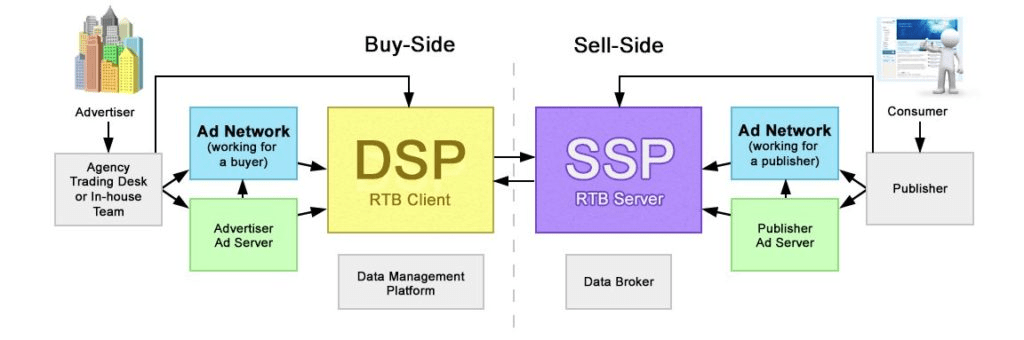
Here are the key platforms involved in video ad delivery:
1. Video Demand-Side Platforms (DSPs)
It is a software used by media buyers such as brands, advertisers, and agencies to purchase video ad inventory from publishers through real-time bidding (RTB) auctions.
2. Video Supply-Side Platforms (SSPs)
It is a software used by publishers to aggregate, manage, and sell their video inventory to media buyers via RTB auctions. These platforms typically offer analytics, yield management, optimization tools, and inventory control.
3. Video Ad Servers
These platforms centralize the storage, tracking, and delivery of video ads for advertisers. The video ad servers also assist publishers with managing advertiser campaign tags and deciding which video ads to serve.
4. Video Ad Networks
A video ad network is a platform that aggregates ad space across multiple publishers and sells it to advertisers. Most ad networks facilitate transactions between publishers and advertisers without owning media. Exceptions include walled gardens like Facebook (which includes Instagram) and Google (which owns YouTube and other properties).
Video Ad Serving Process
The video ad serving process is more complex than display ads, involving multiple AdTech platforms and bid requests.
- A user visits a site with a video player, which requests the video content from the publisher’s web server.
- The server responds with instructions on where to retrieve the video and how to display it.
- The video player, which must support HTML5 video and VAST tags, fetches the video content.
- The video player sends a VAST request to the publisher’s ad server to get the video ad or ad markup; the ad server counts an impression.
- The publisher’s ad server decides which ad to display and sends back the ad markup.
- The ad markup prompts the video player to request the video ad from the advertiser’s ad server, which counts as an impression.
- The advertiser’s ad server provides a link to the video ad hosted on a Content Delivery Network (CDN).
- The video player requests the ad file from the CDN, which delivers it, and the ad plays for the user.
What are the Benefits of Video Ads?
Video ads offer a multitude of benefits over static ad formats. From higher engagement rates to successfully capturing user attention, publishers tend to see an uptick in ad revenue by displaying these ads.
1. Higher CPMs
Video ads CPM rates are significantly higher compared to static ads. Videos are more likely to persuade viewers to take specific actions, such as visiting a website, signing up for a subscription, or making a purchase. For example, Video ads CPM for YouTube in the U.S is $32.75. The significantly higher numbers make video ads CPM an important consideration for publishers aiming to maximize revenue.
2. Better Time On-site
Video advertising can lead to higher time on-site as visitors tend to stay longer on a website/app while engaging with a video ad. The increased engagement that the ads bring into the mix also reduces the bounce rate. These factors improve the overall metrics of the platform.
3. Versatile Formats
Video ads’ main USP is their versatility. Consider it to be water, taking the shape of whatever utensil it is poured into. There are in-stream ads for video-intensive environments, out-stream ads for non-video environments, rewarded and playable ads for gaming apps, and so on. Its versatility makes it possible for publishers to display them on every possible platform and placement.
Challenges with Video Ads
Just like any other AdTech product, video ads come with both upsides and downsides. In this section, we will be exploring some challenges that publishers can face with video advertising. And, in the subsequent sections, we will discuss how you can overcome them.
1. Complex Deployment
Video ads require more technical setup compared to standard display ads. Publishers often need to integrate video players, ensure cross-device compatibility, manage encoding formats, and comply with VAST/VPAID standards. This complexity can slow down deployment and demand additional resources.
2. Short Attention Span
Today’s viewers have limited patience for long or irrelevant video ads. If an ad fails to capture attention within the first few seconds, viewers may skip, disengage, or drop off entirely. This makes the creative and format selection critical for publishers.
3. Ad Fatigue
Excessive repetition of the same video ads can lead to ad fatigue, where audiences become desensitized or annoyed by the content. This not only reduces engagement but can also limit the effectiveness of campaigns.
What Counts as a Video View on Each Platform?
As a publisher, you need to know and understand platform-wise video ad metrics to make the most out of them. Let’s look at some famous platforms and what they consider a video ad view.
- Meta: 3 seconds of continuous video viewing
- Google and YouTube: Clicks on the ad/CTA, 30 seconds of continuous viewing if the ad itself is longer than 30 seconds, or fully-watched if shorter than 30 seconds.
- TikTok: Gets counted as soon as your video starts playing
- LinkedIn, Reddit, Pinterest, X: When 50% of the ad is visible and plays for two or more continuous seconds
- Snapchat: At least two seconds of viewing or swiping up on the ad
What are the Essential Metrics to Measure Video Ad Performance?
As a publisher, you can follow the following metrics to know how video advertising is faring for you:
- View Count: It represents the total number of times a video ad was actually watched, meeting platform-specific criteria.
- Reach: It is the number of unique users who saw the video ad at least once, regardless of how many times they watched it.
- Engagement Metrics: Watch Time (total amount of time viewers spend watching the video) and Completion rate (percentage of users who watched the video till the end).
- Conversion Metrics: Click-through Rate (CTR – percentage of users who clicked on the ad/associated link)
- View-through Rate: It measures the percentage of total ad impressions that result in completed video views.
Video Advertising vs Display Advertising
If we have to summarize the differences, then video ads are ideal for engagement and conversions, while display ads are mainly for educational and awareness purposes.
| Aspect | Video Advertising | Display Advertising |
| Format | Uses moving visuals, sound, and storytelling (pre-roll, mid-roll, post-roll, in-feed, rewarded video, in-banner, CTV/OTT). | Static images, banners, animations, GIFs, or interactive units (pop-ups, overlay ads, standard banner sizes like 300×250, 728×90). |
| Placement | Appears on video platforms (YouTube, TikTok), streaming services (OTT/CTV), social feeds, websites, and in-app. | Serves across a vast network of websites, apps, and search engines |
| User Experience | Immersive, story-driven, stronger attention capture, but can be perceived as disruptive or resource-heavy. | Less immersive; static presence across web pages. Comparatively easier to ignore (banner blindness) but non‑interruptive. |
| Engagement | High engagement due to motion and sound; higher brand recall | Engagement measured mainly through CTR; click-through tends to be much lower |
| Creative Effort | High production value required; often costly and time‑intensive | Faster and cheaper to create; templates and static assets make it accessible to small businesses with limited resources. |
Best Practices to Succeed at Video Advertising
If not used wisely, video ads are very likely to disrupt the user experience. Here are some tips for publishers running video advertising on their websites:
1. Always Keep the Audio Off
According to the Coalition for Better Ads, autoplay ads with sound are among the most intrusive. Many browsers, including Chrome, block them by default. Publishers running such ads risk user backlash and even blacklisting.
2. Maintain Minimum Viewability Standards
According to the Interactive Advertising Bureau (IAB) and the Media Rating Council (MRC), a viewable video ad is defined as one where at least 50% of the ad is visible for two continuous seconds. Meeting this standard ensures your video ad can be counted as truly seen, making your inventory more valuable to advertisers.
3. Page Load Time
We already know 40% of users leave websites that take more than 3 seconds to load (OddBall Marketing).
Video ads increase page weight and slow load times. In such cases, lazy loading ads help. With lazy loading, the content of the page is allowed to load first, and heavy ads appear after a certain user engagement (like >30% page scroll).
4. Try Video Header Bidding
Publishers can consider implementing video header bidding to maximize the video ad CPMs and bring-in more diverse advertiser demand. Moreover, as the auctions occur in parallel with video content loading, it reduces latency and ensures smooth ad delivery without disrupting the viewer. This keeps the ad experience fast and reliable for users.
5. Don’t Overwhelm the Users
Too many ads are always a bad idea. It reduces viewability since consumers are unable to focus on content or advertising, increases page load time, and, worst of all, leads to adblocker installation. To gauge your website’s potential, it is recommended that you start with layout optimization. Then, strategically place ad units based on how long viewers spend on different portions of your page.
6. Setup an AdOps Team
Video ad setups involve technical and operational challenges best handled by an AdOps team. Whether in-house or outsourced, a dedicated team can optimize performance, troubleshoot issues, and streamline revenue growth.
Setting up a whole AdOps team can be a challenge for many publishers, especially for small and mid-sized publishers. In such cases, it is ideal to outsource the Ad operations to a reliable AdTech partner, such as AdPushup. Our seasoned AdOps experts are up-to-date with the latest happenings in the AdTech industry, to ensure proper privacy compliance without affecting the revenue and UI/UX aspect of your publishing business.
How to Run Video Ads in Google Ad Manager (GAM)?
Understanding the process of running Google video ads in Google Ad Manager can be tricky at first, and publishers may encounter technical difficulties. But the growth that Google video ads will bring to your revenue is worth the effort.
In case doing this on your own is too difficult, here’s the process of implementing Google video ads via GAM is a 5-step process:
1. Create Ad Units
2. Video Ad Tag Generation
3. Create Video Line Items
4. Add Creatives to Line Items
5. Create Reports
You can read in detail about it here: How to Run Video Ads in Google Ad Manager (GAM)?
Video Advertising Trends for 2025
As the video advertising landscape continues to evolve, many trends have emerged that will define 2025 and 2026. Some of them include:
1. Interactive and Gamified Video Ads
As the attention span of users decreases day by day, publishers need to come up with innovative ad formats to retain their users. As per a market report, the engagement rate of interactive video ads is 3 times that of static ads. Hence, there will likely be an increase in the adoption of such engaging ad formats in 2025 & 2026 among app publishers.
2. Next-gen Video Ad Formats
Video advertising formats like native video ads and outstream ads can see a higher adoption rate among content-heavy websites. When placed mindfully, they offer a refreshing break from the usual content, hence increasing the engagement and retention rate.
3. Mobile-friendly Vertical Videos
Another trend that we see flourishing in 2025 & 2026 will be vertical video advertising. As mobile usage increases, more users will be receptive to ads that are mobile-friendly. Vertical video ads not only look natural on mobile screens, but also provide a large canvas for advertisers to create something meaningful.
4. Sticky/Floating Video Ads
This video ad format is also set to rule the video advertising industry in 2025 and 2026. Sticky or floating ads are a great way to monetize websites running video advertising without being intrusive. As the ad sticks to the screen’s corner, it remains in the viewport. At the same time, it doesn’t overshadow the primary content – a win-win situation for both publishers and advertisers.
5. AI-based Recommendations
Premium publishers are bundling video inventory with AI-driven content recommendations and personalized experiences as part of curated direct deals to attract higher CPMs and branded campaigns. The uptick in this trend will continue throughout 2025 and 2026. And as we know, early birds get the worm.
Monetize Website with AdPushup Video Ads
Has your ad revenue plateaued? Or are your eCPMs decreasing? You are in the right place. Run video ads with AdPushup and experience 5x CPMs.
With AdPushup’s Video Ads, you will get:
- Access to a dedicated Certified Ad Ops account manager.
- Sequential ad control with preloading and autoskip.
- Natively integrate with your video player to get access to 30+ premium ad networks.
Built for seamless UX and effective ad monetization, it uses machine learning and custom auction logic to deliver real-time, user-targeted bids. The player supports both in-content and floating ads, adapts to any site design, and runs in low-power mode to keep videos smooth and relevant. Dynamic floors and targeted, lightweight ads ensure users see high-quality content with no lags.
FAQs on Video Ads
They are short promotional videos used for advertising by appearing before, during, or after other video content, or as standalone videos on various platforms.
These ads utilize visual and audio elements to capture attention, convey a message, and encourage viewers to take action, such as making a purchase or visiting a website.
The types of video advertising include:
– Native video ads: Seamlessly blends with the website/app’s user interface to provide a smooth browsing experience to the uses.
– Interstitial Ads: Full-screen ads that are displayed within natural website/app transitions.
– Instream Ads: Ads that are deployed in video-intensive environments where the user’s main intent is to watch the video content.
– Outstream ads: Ads that are displayed in non-video environments or content-intensive platforms to capture the user’s attention.
– Playable ads: Interactive mini ads that allows users to to try the core functionality of the before downloading.
– Rewarded ads: Ads that users can voluntarily watch in exchange for rewards like in-game currency, unlocking new gaming levels, etc.